
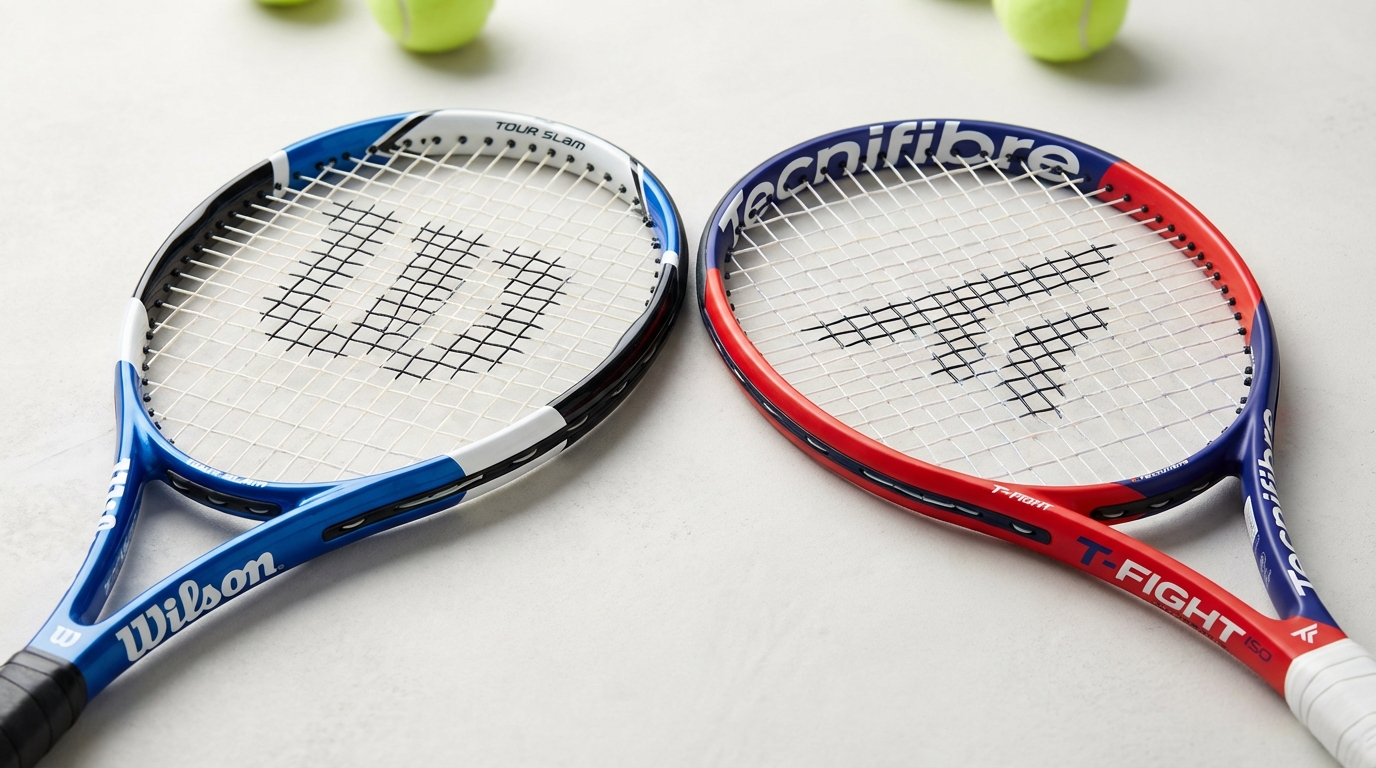
You’ve finally decided to get serious about your time on the court, or perhaps you’re just looking for a way to get some exercise on the weekends. Either way, you’ve hit the same wall every player eventually faces: the equipment wall. Choosing a tennis racquet can feel like trying to pick a favorite child, especially when you’re looking at two frames that sit on opposite ends of the spectrum in terms of price and technology.
Today, we’re looking at the Wilson Tour Slam and the Tecnifibre T-Fight ISO 270. On paper, they both promise to help you hit the ball over the net, but the experience of swinging them couldn't be more different. One is a budget-friendly entry point designed to get you playing for the price of a nice dinner, while the other is a precision-engineered tool built for players who want to develop a "real" game.
In this comparison, I’m going to break down why the price gap between these two is so significant and whether your current skill level justifies the investment in high-end graphite or if the reliable alloy of the Wilson is all you need for now. We'll look at the sweet spot, the swing weight, and how each of these handles the vibration that often leads to the dreaded tennis elbow.
Our Top Pick

Tecnifibre
Tecnifibre T-Fight ISO 270 Tennis Racquet 4 1/4"
Quick Verdict
If you are a total beginner who just wants to see if tennis is for you without breaking the bank, the Wilson Tour Slam is a fantastic, low-risk entry point. However, for anyone planning to play more than once a month or looking to improve their technique, the Tecnifibre T-Fight ISO 270 is the clear winner. Its graphite construction and ISO technology provide a level of feel and arm protection that the Wilson simply cannot match.| Feature | Wilson Tour Slam | Tecnifibre T-Fight ISO 270 |
|---|---|---|
| Our Score | 9.8/10 (Beginner) | 9.5/10 (Performance) |
| Price | $39.99 | $177.97 |
| Material | Air Lite Alloy (Steel) | Graphite |
| Head Size | 106 sq inches | 100 sq inches |
| Weight | 12.3 oz (0.35 kg) | 9.5 oz (270g) |
| String Pattern | 16 x 20 | 16 x 19 |
| Skill Level | Beginner | All Levels (Intermediate Focus) |
| Status | Pre-strung | Unstrung |
Frame Construction: Alloy vs. Graphite
The most significant difference between these two racquets isn't the color or the brand name; it’s what’s under the paint. The Wilson Tour Slam is constructed from "Air Lite Alloy," which is essentially a specialized steel/aluminum blend. Alloy racquets are incredibly durable—you can drop them or knock them against the court, and they likely won't crack. However, alloy is a stiff material that doesn't dampen vibration well. When you hit a ball off-center with the Wilson, you’re going to feel that "buzz" travel right up your arm.In contrast, the Tecnifibre T-Fight ISO 270 is made of high-modulus graphite. Graphite is the industry standard for performance racquets because it allows for a specific "flex rating." It can be engineered to be stiff where you need power and flexible where you need comfort. The T-Fight also features "ISO technology," which refers to the Isometric frame design and RS Section geometry. This helps stabilize the frame during impact, ensuring that the energy goes into the ball rather than into your wrist.
If you have any history of wrist or elbow pain, the choice is already made for you. The graphite in the Tecnifibre is much more arm-friendly over long hitting sessions.
Head Size and the "Sweet Spot"
The Wilson Tour Slam features an oversized 106-square-inch head. In the world of tennis, a larger head size usually translates to a larger "sweet spot"—that magical area in the center of the strings where the ball flies off effortlessly. For a beginner, this is a huge advantage. When your footwork isn't perfect and you're reaching for balls, that extra surface area helps you keep the point alive.The Tecnifibre T-Fight ISO 270 uses a 100-square-inch head, which is considered the "sweet spot" for modern tennis frames (pun intended). While it's smaller than the Wilson, the ISO technology actually expands the effective hitting area. A 100-square-inch head offers much better "control-oriented" play. You’ll find it easier to direct the ball into the corners with the Tecnifibre, whereas the Wilson can sometimes feel a bit like a trampoline—plenty of power, but harder to predict where the ball will land.
Weight and Maneuverability
There is a common misconception that heavier racquets are harder to use. While the Wilson Tour Slam is listed at 0.35kg (about 12.3 ounces), it is actually quite heavy for a beginner frame. This weight gives it "plow-through," meaning the racquet won't get pushed back by a heavy ball. However, for a new player with slower swing speeds, a 12-ounce racquet can become tiring after the first set.The Tecnifibre T-Fight ISO 270 weighs in at a nimble 9.5 ounces (270 grams). This is the "lightweight" version of Tecnifibre’s flagship line. This lower static weight makes it incredibly easy to whip through the air. If you're working on generating topspin or trying to get your racquet back quickly at the net for a volley, the Tecnifibre is significantly more maneuverable. It allows you to develop a faster swing speed, which is how modern players generate both power and spin.
String Bed and Playability
The Wilson comes "strung and ready to play." For $40, this is a massive convenience. You can pick it up at the store and go straight to the courts. The 16x20 string pattern is slightly tighter than the standard, which helps provide a bit of control to counteract the oversized head. However, the factory strings are usually basic synthetic gut, which will lose tension quickly.The Tecnifibre T-Fight ISO 270 usually arrives unstrung. This is a "pro-style" approach. It means you have to spend an additional $20-$40 on a set of strings and a labor fee at your local pro shop. While this is an extra expense, it allows you to customize the playability. You can choose a soft multifilament for comfort or a polyester string for maximum spin. The 16x19 pattern on the Tecnifibre is the gold standard for spin potential, allowing the main strings to "snap back" and bite into the ball.
Performance on the Court
When you take the Wilson Tour Slam to the court, the first thing you notice is the "pop." It’s a powerful racquet. If you’re just dinking the ball back and forth, it does a lot of the work for you. The 4 1/4" grip is standard and comfortable, though the alloy frame does feel a bit "hollow" upon impact. It’s a great tool for learning the basics of the swing.Switching to the Tecnifibre T-Fight ISO 270 feels like going from a reliable sedan to a sports car. The feedback is much more precise. You can feel exactly where on the string bed you made contact. Because it's lighter, you'll find yourself swinging harder and with more confidence. The "swing weight" feels balanced—not too head-heavy, not too head-light. It’s a racquet that grows with you. As your swing gets faster and your timing improves, the T-Fight rewards you with better depth and accuracy.
Pros and Cons Summary
Wilson Tour Slam
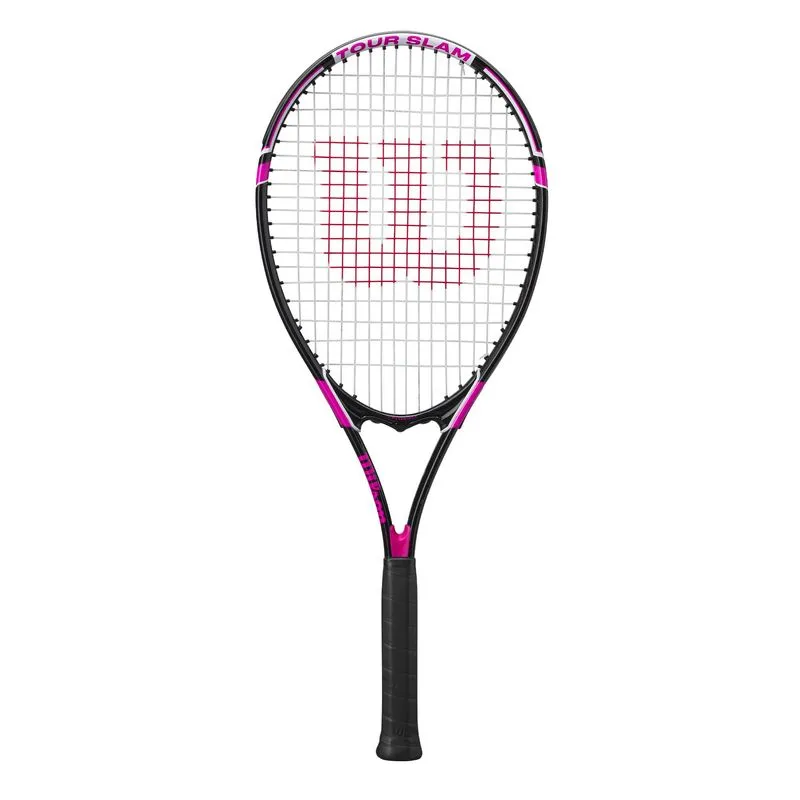
The Tour Slam is built for the recreational player who wants the Wilson experience without the high price tag. It is durable, powerful, and ready to hit the court the moment you buy it.
Wilson Tour Slam Adult Tennis Racquet - Black/Pink - Pros & Cons
thumb_up Pros
- check_circle Incredible Value: At under $40, it's one of the most accessible entry points to the sport.
- check_circle Forgiving Head Size: The 106 sq inch head makes it easier for beginners to make clean contact.
- check_circle Durability: The alloy frame can take a beating on the asphalt without cracking.
- check_circle Convenience: Comes pre-strung, saving you a trip to the stringer.
thumb_down Cons
- cancel Vibration: The alloy material transmits more shock to the arm than graphite.
- cancel Weight: At 12.3 oz, it may be too heavy for some beginners to swing comfortably for long periods.
- cancel Limited Growth: Once you reach an intermediate level, you will likely feel limited by the lack of "feel" and control.
Tecnifibre T-Fight ISO 270
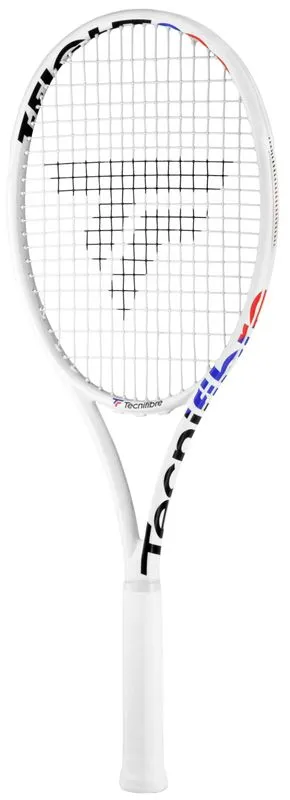
The T-Fight ISO 270 is a performance-oriented frame that bridges the gap between beginner ease-of-use and professional-level precision. It is an investment in your long-term development as a player.
Tecnifibre T-Fight ISO 270 Tennis Racquet 4 1/4" - Pros & Cons
thumb_up Pros
- check_circle Premium Materials: The graphite construction offers superior dampening and energy return.
- check_circle Maneuverability: At 9.5 oz, it’s exceptionally easy to swing, making it great for juniors and adults alike.
- check_circle Advanced Tech: ISO technology provides a consistent feel even on off-center hits.
- check_circle Versatility: Suitable for a wide range of skill levels, from ambitious beginners to competitive club players.
thumb_down Cons
- cancel Price: At nearly $180 (plus stringing costs), it’s a significant investment.
- cancel Setup Required: You’ll need to research and pay for strings separately.
- cancel Power Potential: Because it’s light, players with very short swings might find it lacks the "free power" of a heavier, larger frame.
Price vs. Value: The Real Cost of Tennis
Let’s talk numbers. The Wilson is $40. If you play ten times and decide tennis isn't for you, you’ve spent $4 per session. That’s a win.
The Tecnifibre is roughly $178, plus about $30 for a good string job, bringing you to $208. That is five times the price of the Wilson. Is it five times better? If you are playing twice a week, the answer is yes. The reduced risk of injury (tennis elbow) alone is worth the price of admission. Furthermore, you won't "outgrow" the Tecnifibre in six months. It’s a racquet you can use for years as you move from a 2.5 to a 4.0 NTRP rating.
Final Verdict: Which One Should You Buy?
Choosing between these two comes down to your commitment level and your budget.
Choose the Wilson Tour Slam if:
- You are a casual player who hits the court a few times a year.
- You are buying a racquet for a guest or a "just in case" backup.
- You are on a strict budget but want a recognizable brand name like Wilson.
- You prefer a heavier, oversized frame that provides plenty of power with minimal effort.
- You are taking lessons and want a racquet that supports proper technique.
- You have experienced wrist, elbow, or shoulder discomfort in the past.
- You want a lightweight, fast-swinging racquet that helps generate spin.
- You view tennis as a long-term hobby and want to invest in equipment that won't hold you back as you improve.
Is a 100 sq inch head size too small for a beginner? expand_more
Not at all. While 106 or 110 sq inches provides a larger safety net, 100 sq inches is the standard for a reason. It provides a great balance of power and control. Most modern beginners find that a 100 sq inch graphite frame is plenty forgiving, especially with technologies like
Why does the Tecnifibre come unstrung? expand_more
High-performance racquets are sold unstrung because advanced players are very picky about their strings. They want to choose the specific material (polyester, multifilament, or natural gut) and the exact tension (usually between 48 and 58 lbs). Selling it unstrung allows you to customize the racquet to your specific playing style.
Is the Wilson Tour Slam okay for kids? expand_more
The Tour Slam is an "Adult" racquet. While a teenager could certainly use it, the 12.3 oz weight might be too much for younger children (under 12). For kids, you should look for "Junior" racquets which are shorter (21-26 inches) and much lighter to prevent injury and encourage proper swing mechanics.
How often should I restring the Tecnifibre T-Fight? expand_more
A good rule of thumb is to restring your racquet as many times per year as you play per week. If you play twice a week, restring it twice a year. However, if you notice the strings looking frayed or the racquet starts to feel "dead" or like a butterfly net, it’s time for a fresh set of strings to restore that playability.