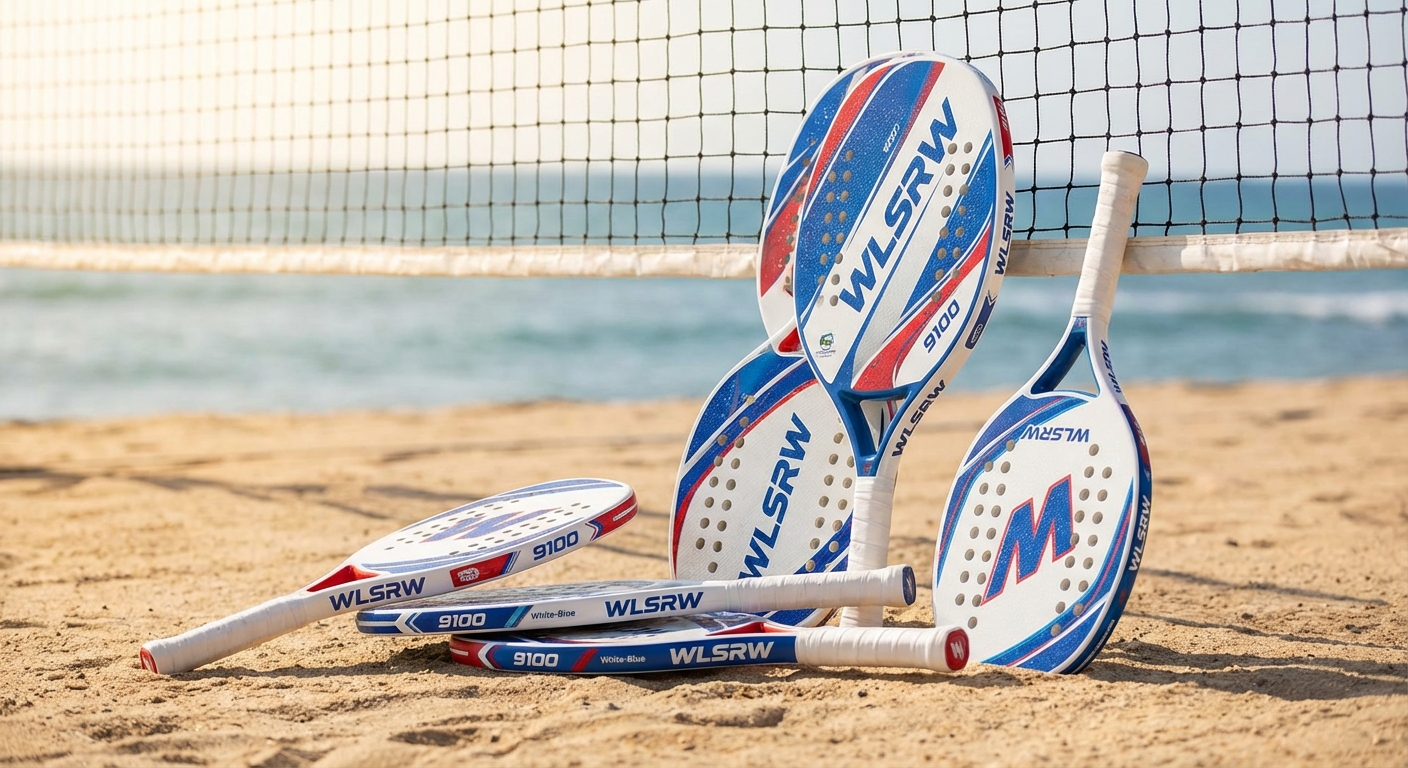

Wilson Blade 98, Shift 99 & Ultra 108: A Deep Dive into Wilson Tennis Rackets
When you think of tennis history, it is almost impossible not to picture the iconic "W" stenciled on the strings of a champion's racket. Wilson isn't just a manufacturer; they are a cornerstone of the sport's heritage.
This brand positioning is unique. They bridge the gap between absolute heritage—think Roger Federer and Serena Williams—and cutting-edge material science. When you pick up a Wilson, you aren't just holding a tool; you are holding a piece of tennis history.
Wilson Design Philosophy: Why Feel Matters in the Blade & Shift
They engineer rackets that "talk" to the player. Whether it's the crisp response of the Pro Staff line or the plush pocketing of the Blade series, the goal is feedback.
Recently, their technology focus has shifted toward stability and flexibility. They are using carbon mapping to allow frames to bend in ways that complement the modern, vertical swing path. It is high-tech engineering disguised as classic playability.
Top 5 Wilson Rackets: Blade 98, Shift 99, Ultra 108 & More Compared
Wilson offers a massive ecosystem of frames. It can be overwhelming. I’ve broken down five specific models that showcase exactly what this brand is capable of, ranging from tour-level precision to backyard fun.
Why the Wilson Blade 98 (16x19) V9 Dominates the Tour
The Wilson Blade 98 (16x19) V9 is the standard-bearer for control-oriented players. If you watch college tennis or the pro tour, you see this emerald green frame everywhere.
Watch: Wilson Blade 98 (16x19) V9 Tennis Racket
The V9 update introduces "StableFeel" technology. This reinforces the frame against twisting during off-center hits. If you are a big swinger who likes to dictate points from the baseline, this is your weapon.
The 16x19 string pattern is crucial here. It offers a slightly more open bed than the 18x20 version, giving you easier access to spin and a higher launch angle. It is precise, but not punishingly so.
How the Wilson Shift 99 V1 Changes Modern Spin
The Wilson Shift 99 V1 is the rebel in the family. While the Blade is about linear control, the Shift is built for the modern, heavy-spin game.
Wilson designed this racket with a unique bending profile. It stays stiff horizontally for power but bends vertically. This vertical bending allows the racket to snap back when you brush up the back of the ball.
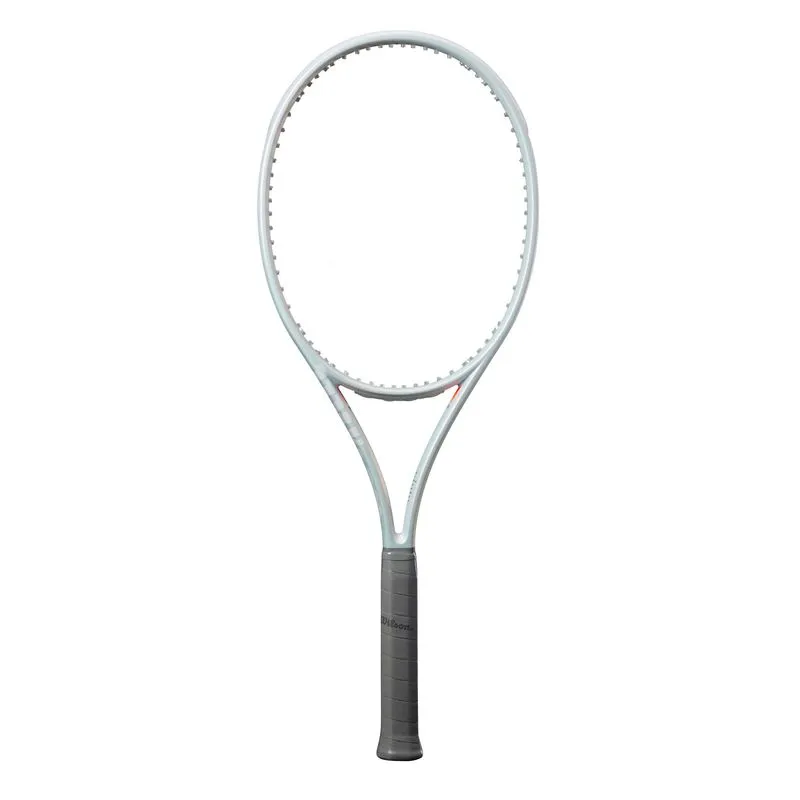
The result is massive spin potential. It keeps the ball inside the lines even when you aim high over the net. It feels different—crisper and livelier than a Blade, but more controlled than a pure power frame.
The Wilson Ultra 108 V4.0 for Effortless Power
Not everyone wants a heavy, thin-beamed player's frame. The Wilson Ultra 108 V4.0 is designed for players who want the racket to do the heavy lifting.
The "108" refers to the square inch head size. That is significantly larger than standard, providing a massive sweet spot. If you are a doubles specialist or a senior player who wants to keep the ball deep, this is it.
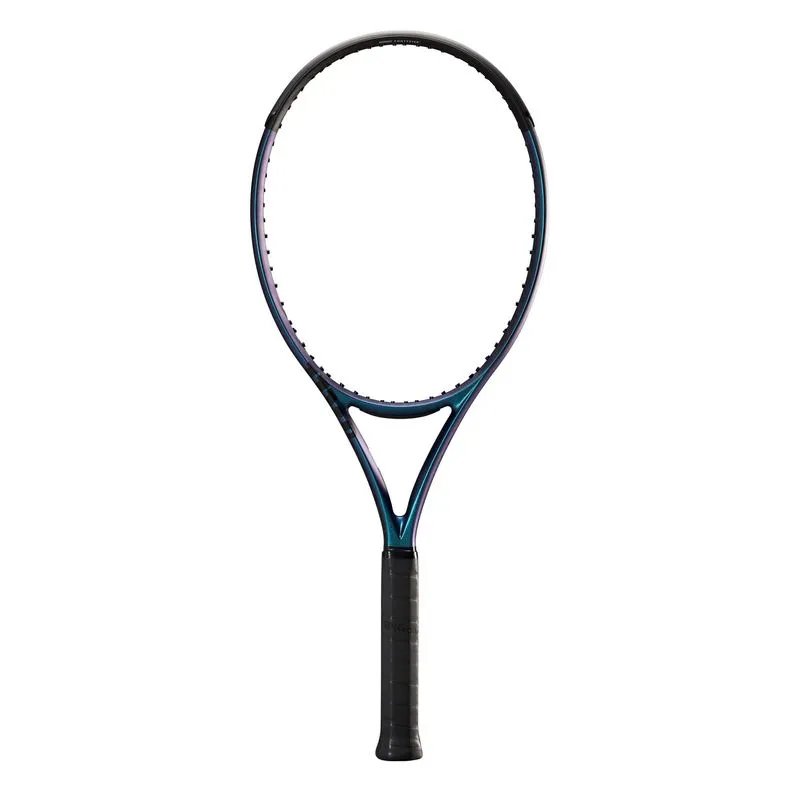
The beam is thick and firm. This translates to instant energy return. You barely have to touch the ball to send it back with pace. It prioritizes comfort and easy depth over surgical precision.
Why the Wilson Hyper Hammer 5.3 is a Cult Classic
You might be surprised to see the Wilson Hyper Hammer 5.3 on this list, but it is a legend for a reason. This racket focuses on heritage and "easy power" through a unique weight distribution.
It is an incredibly light frame, but it is "head heavy." Most pro frames are head light. By putting the weight in the hoop (the Hammer system), Wilson gives you a sledgehammer effect without the heavy total weight.
Watch: Wilson Hyper Hammer 5.3 Tennis Racket - 4 3/8" Grip
This is perfect for recreational players with shorter, more compact swings. It provides stability and plow-through that usually requires a much heavier racket. It’s a cheat code for depth.
The Wilson Tour Slam for Budget-Friendly Beginners
If you are just stepping onto the court for the first time, the Wilson Tour Slam is the entry point. This isn't about high-tech carbon mapping; it's about accessibility.
It features a massive 112-square-inch head. You could almost miss the ball and still hit it. The Stop Shock Pads help reduce vibration, which is great for untrained arms.
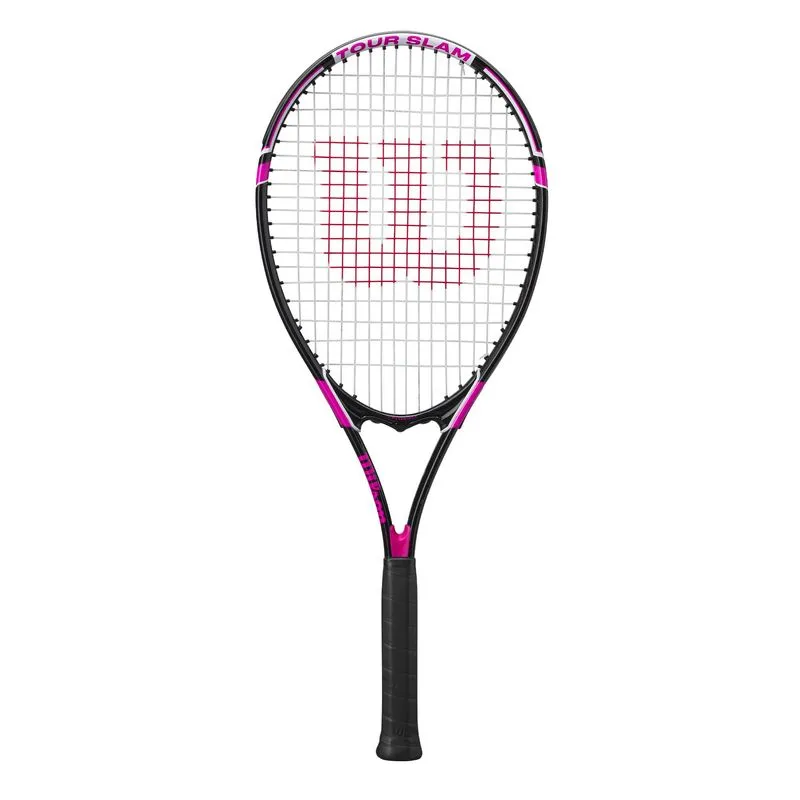
It gives you a taste of the Wilson brand without the investment required for a performance frame. It’s durable, forgiving, and gets the job done for casual hitting.
Analyzing Wilson Technologies: StableFeel, FORTYFIVE, and Drilling
Wilson loves their proprietary tech terms. Let's decode the three most important ones currently affecting your game.
StableFeel is the star of the new Blade V9. It is a layup technology that increases the bending stability of the frame. Basically, it prevents the racket head from wobbling when you hit the ball near the frame edge, giving you a more consistent feel.
FORTYFIVE (formerly FreeFlex) is the carbon mapping used in the Clash and Blade. It increases flexibility without sacrificing stability. It is designed to accommodate the vertical swing path of the modern game, creating better ball pocketing.
Parallel Drilling is a grommet feature. Instead of drilling holes at an angle, Wilson drills them parallel to the string movement. This allows the strings to move more freely upon impact, expanding the sweet spot and adding a bit of comfort.
Wilson Performance Characteristics and Feel
What separates Wilson from brands like Babolat or Head? It usually comes down to the "crispness" of the feedback.
Wilson frames, generally speaking, offer a very connected feel. When you hit the ball with a Blade 98 or a Pro Staff, you know exactly where it is going. There is less muting than you might find in some modern "dampened" rackets.
| Feature | Wilson Characteristic |
|---|---|
| Feedback | High connection, "ball feel" is a priority |
| Sweet Spot | Precise in player frames, massive in game improvement frames |
| Stability | Excellent, especially in V9 models |
| Grip Shape | distinctive, slightly more rectangular handle shape |
Price Range and Value for Money
Wilson operates across the entire pricing spectrum, which is a massive strength.
At the top end, frames like the Blade 98 V9 and Shift 99 sit in the premium tier ($250-$270 range). While expensive, the build quality and resale value of Wilson frames are exceptionally high. A well-kept Blade holds its value on the used market better than almost any other racket.
In the mid-range and recreational tier, options like the Hyper Hammer 5.3 offer incredible value. You get performance technology that was once state-of-the-art for a fraction of the price of a new flagship model.
The Tour Slam represents the budget tier ($30-$50). It’s cheap, but for a one-piece aluminum/composite frame, it is sturdy enough for driveway tennis or learning the basics.
Who Should Consider Wilson?
Because their lineup is so deep, Wilson is a safe bet for almost anyone. However, they are the ultimate choice for the "feel" player.
If you are an advanced player who relies on touch, the Wilson heritage lines (Blade/Pro Staff) are your home.
Conversely, if you are a senior player looking to extend your career, the Ultra 108 and Hyper Hammer options provide mechanical advantage.
FAQ: Common Wilson Questions
What is the difference between the Wilson Blade and the Wilson Clash? expand_more
The Blade (like the V9 16x19) is designed for control and stability for players with full swings. The Clash is designed for extreme flexibility and comfort. The Clash is much easier on the arm and offers free power, while the Blade offers precision and feedback.
Does the Wilson Shift 99 actually help with spin? expand_more
Yes. The vertical bending technology allows the frame to deform slightly when you brush up on the ball. This creates a "snap-back" effect that adds RPMs (revolutions per minute) to your shot, helping the ball dive into the court.
Why is the Hyper Hammer 5.3 so popular after all these years? expand_more
It solves a specific problem: lack of power. By making the racket light but head-heavy, it allows players with slow swings to generate significant pace. It is user-friendly, affordable, and effective, which never goes out of style.
Is the Tour Slam good enough for tennis lessons? expand_more
For the very first few lessons, yes. However, if you plan to play regularly, the aluminum construction of the