YONEX Brand History: From Wood Floats to Graphite Perfection
When you pick up a frame like the YONEX Percept 100, you aren't just holding graphite; you are holding nearly a century of Japanese manufacturing heritage. Founded in 1946, YONEX actually started out making wooden floats for fishing nets. It wasn't until later that they transitioned into badminton rackets, eventually dominating that sport before bringing their precision engineering to tennis.
What sets this brand apart is their obsession with quality control. While many competitors outsource production entirely, YONEX continues to manufacture their premium "performance" frames (like the EZONE 98 and VCore 100) at their own factory in Niigata, Japan. This results in the tightest weight and balance tolerances in the industry. If you buy two YONEX frames, they will likely feel identical—a rarity in the tennis world.
The YONEX Philosophy: Why the EZONE and VCore Look Square
If you place a YONEX EZONE 98 next to a standard oval racket, the difference is immediate. The head shape is noticeably square. This is the ISOMETRIC head shape, and it is the core philosophy of the brand.
Watch: YONEX EZone Ace Tennis Racquet - 4 3/8" Grip
YONEX believes that round rackets waste potential hitting area. By squaring off the top of the hoop, they lengthen the cross strings to match the length of the main strings. This expands the sweet spot, giving you more forgiveness on off-center hits without increasing the physical size of the racket head.
Featured Racket Lineup: EZONE vs VCORE vs PERCEPT
YONEX simplifies their lineup into three distinct "silos" based on what your game needs: Power, Spin, or Control. They also offer excellent entry-level frames for those just starting their tennis journey.
The YONEX EZone Ace: Lightweight Entry Level
The YONEX EZone Ace is designed specifically for beginners who need help generating swing speed. Weighing in at a very light 9.2oz (unstrung), this pre-strung frame takes the intimidation out of learning the game. It features a 100 sq inch head for a decent margin of error but doesn't burden the arm with the heavy weight of the pro models. It's the perfect stepping stone before moving up to a graphite performance frame.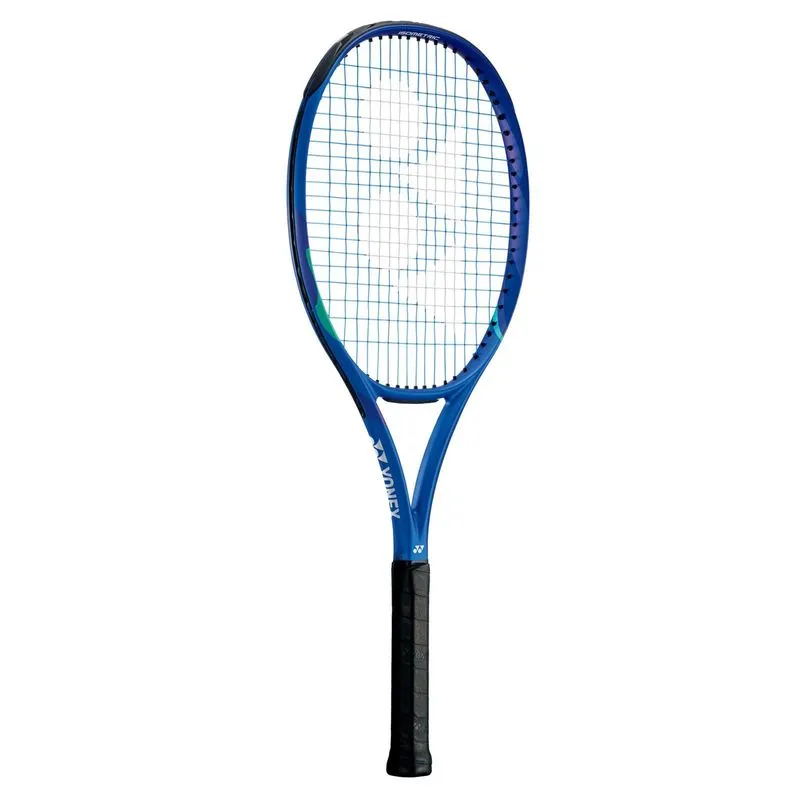
The YONEX EZONE 98: Power and Feel
Endorsed by Naomi Osaka and Nick Kyrgios, the YONEX EZONE 98 is the "easy power" franchise. It features a slightly thinner beam than the 100 version, offering a plush, modern feel. The "Blast Blue" cosmetic hints at its electric nature. It is stiff enough to generate serious pop on serves and groundstrokes, yet comfortable enough to prevent arm fatigue.Watch: YONEX EZONE 98 Blast Blue Racquet
The YONEX VCore 100 8th Gen: The Spin Machine
If you want to rip the ball like Nadal, the Yonex VCore 100 8th Gen is your weapon of choice. This "sand beige" and red frame is engineered for aerodynamics. The key update in the 8th generation is the infusion of silicone oil in the grommets. This lubricates the string bed, allowing the strings to snap back violently upon contact, generating massive RPMs (spin) on the ball.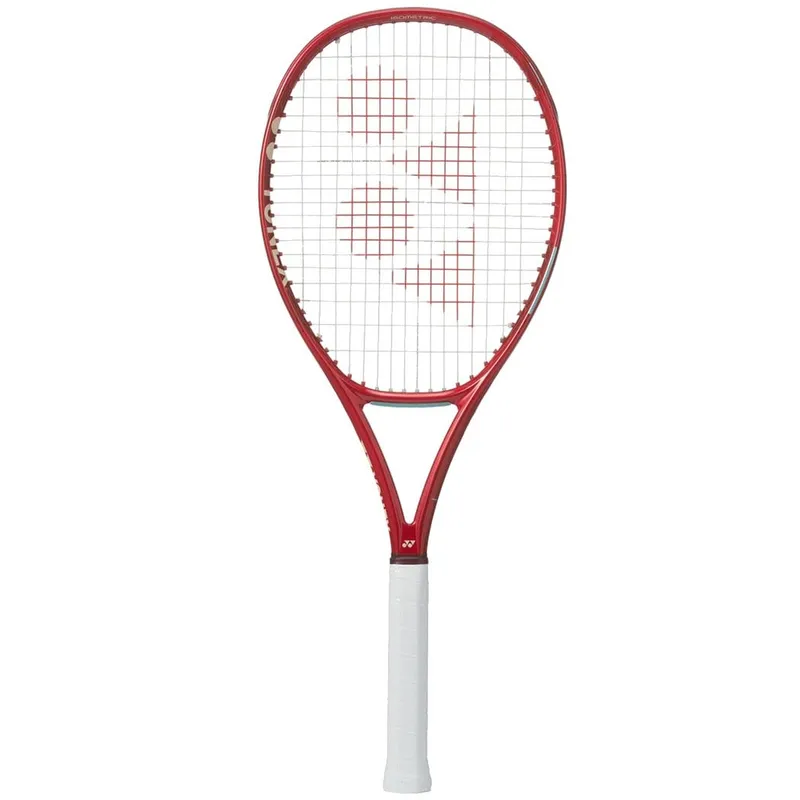
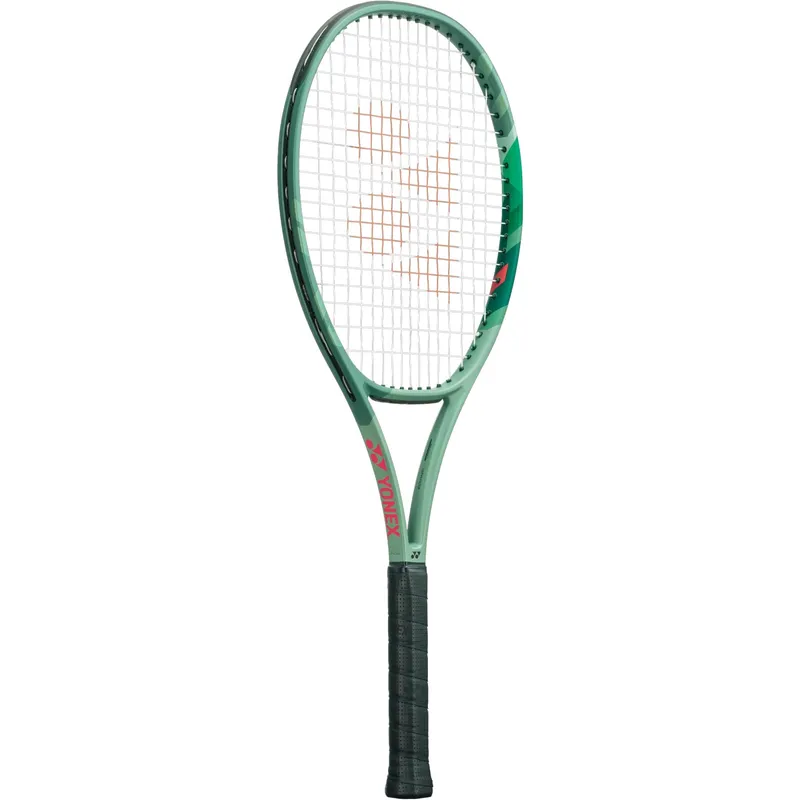
The YONEX Percept 100: Surgical Control
Replacing the VCORE PRO line, the YONEX Percept 100 is for players who bring their own power and need laser-like precision. It features the "Flexcon System" which allows the racket shaft to flex and cup the ball (ball pocketing). It also utilizes a Servo Filter—a transparent film placed between graphite layers—to filter out unwanted vibrations while keeping the essential feedback you need for touch shots.Technology Spotlight: Behind the VCore and Percept Engineering
YONEX packs more visible technology into their frames than almost anyone else. Here is how the tech actually translates to the court.
ISOMETRIC Head Shape
As mentioned, this creates a larger effective hitting area. On the court, this means shots hit near the top of the hoop—a common error for modern heavy-spin players—don't die on the string bed. They still have enough power to clear the net.VDM (Vibration Dampening Mesh)
Found in the handle of the EZONE and VCore lines, VDM is a stretchy mesh material wrapped around the graphite within the grip. It filters out harsh vibrations before they travel up your arm, contributing to that signature "glassy" smooth YONEX feel.2G-Namd Graphite
This is a specific type of carbon nanotube structure used in the VCore 100 and Percept 100. It allows the racket to flex quickly and snap back into place. This energy transfer boosts ball speed and spin potential without making the racket feel "noodle-like" or unstable.Performance Characteristics: The "YONEX Feel"
Players often describe the "YONEX feel" as a unique combination of crispness and comfort. Unlike some brands that feel raw and stiff, or others that feel overly muted, YONEX strikes a middle ground. You get a distinct "pop" sound on contact, but the VDM and Servo Filter tech ensures your elbow doesn't pay the price.
Watch: YONEX Percept 100 Tennis Racquet - Olive Green 4 3/8"
EZONE vs VCORE vs PERCEPT: The Balance
| Series | Model | Color | Characteristics | Best For |
|---|---|---|---|---|
| EZONE | EZONE 98 | Blue | Explosive power | Baseliners who want winners & counter-punchers needing depth |
| VCORE | VCore 100 | Red | High launch angle & spin | Players who shape the ball with topspin |
| PERCEPT | Percept 100 | Green | Flexible control | Flat hitters, serve-and-volleyers, & placement players |
Our Top Pick

YONEX
Yonex VCore 100 8th Gen Tennis Racquet
For the majority of modern tennis players, the VCore 100 8th Gen stands out as the winner of this lineup. While the EZONE offers incredible power and the Percept delivers unmatched feel, the VCore 100 perfectly captures the modern game of heavy spin and high clearance over the net. The addition of silicone oil technology provides that extra snap-back that can be the difference between a ball landing on the baseline or floating long. It is versatile, forgiving, and deadly in the right hands.
Summary
Price Range and Value
YONEX creates a clear divide in their pricing structure based on manufacturing location.
- Premium (Made in Japan): The EZONE 98, VCore 100, and Percept 100 sit at the top of the market price point. You are paying for the Namd graphite, the Servo Filters, and the strict quality assurance.
- Entry/Intermediate (Made in China): The EZone Ace and "Game" versions of the premium lines are significantly more affordable. They use standard graphite and come pre-strung. These offer incredible value for recreational players who want the Isometric advantage without the tournament-level price tag.
Who Should Consider This Brand?
You should switch to YONEX if you: 1. Struggle with consistency: The Isometric head shape saves a lot of off-center shots. 2. Have arm issues: The vibration dampening tech in the EZONE and Percept lines is top-tier. 3. Are a tech-nerd: If you appreciate engineering details like silicone oil grommets and specific graphite layups, YONEX is for you. 4. Demand Quality: If you are tired of buying two rackets that feel different, the Japanese quality control is the solution.
What is the difference between the YONEX EZONE 98 and EZONE 100? expand_more
The EZONE 98 has a smaller head size and a thinner beam, providing more control and feel for advanced players. The EZONE 100 is more powerful, has a larger sweet spot, and is generally easier to use for intermediate players.
Does the square head shape actually help? expand_more
Yes. The Isometric shape expands the sweet spot by approximately 7% by optimizing the intersection of the main and cross strings. This provides more consistent power on shots hit near the frame.
Is the YONEX VCore 100 good for tennis elbow? expand_more
While the VCore 100 is reasonably comfortable, it is a stiffer, spin-oriented frame. If you suffer from tennis elbow, the EZONE line (with VDM) or the flexible Percept line are generally considered more arm-friendly options.
Where are YONEX rackets made? expand_more
High-end performance frames (like the Percept, VCore, and EZONE pros) are manufactured in Niigata, Japan. Entry-level frames like the EZone Ace are manufactured in China to keep costs lower.