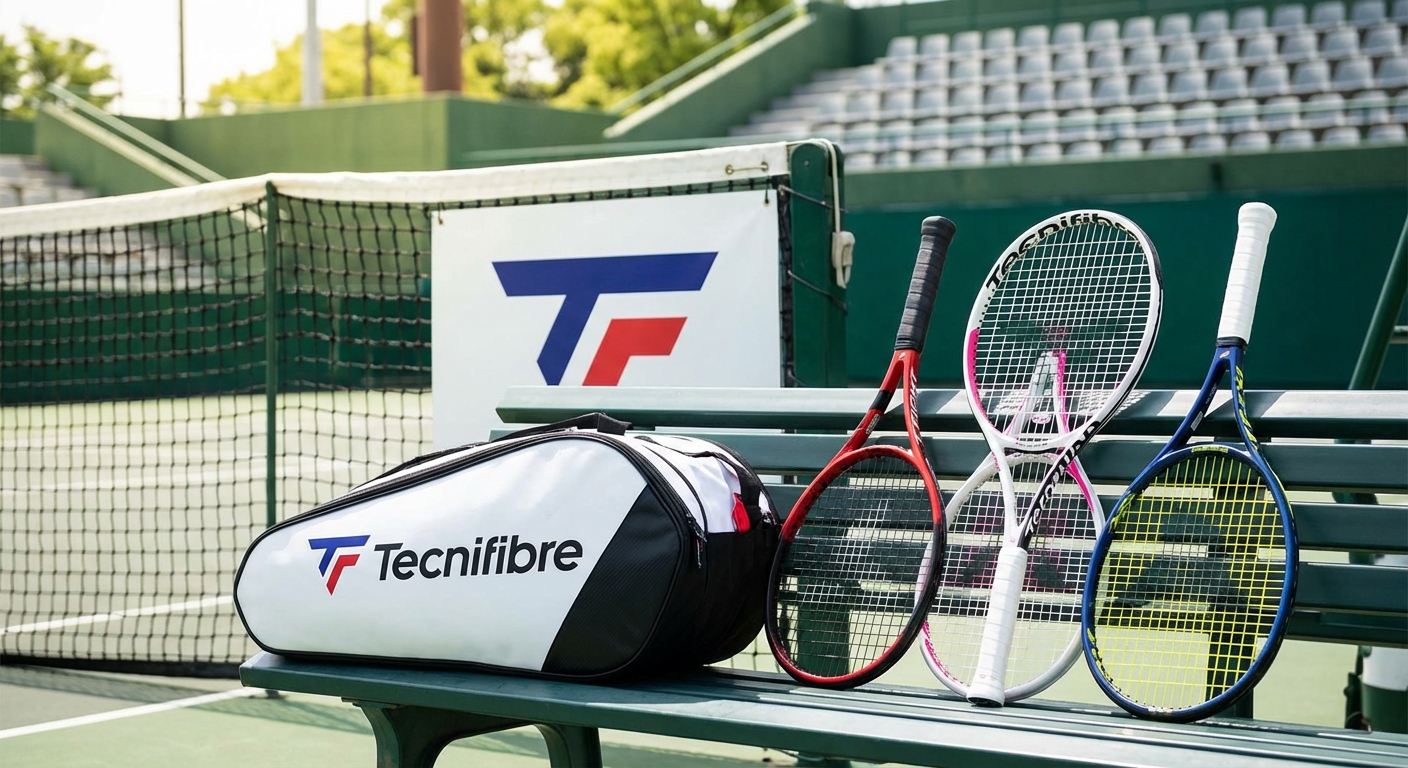
Unlike the giants that started with wood frames decades ago, this French brand began in the engine room: the strings. Founded in 1979 near Paris, Tecnifibre built its name on high-quality multifilaments. They mastered strings like the legendary X-One Biphase before molding a graphite frame.
This "string-first" DNA creates a unique engineering perspective. When they finally launched rackets, they designed the frame geometry to optimize the string bed's performance, rather than treating strings as an afterthought. Today, they have evolved from a niche equipment manufacturer into a major player on the ATP and WTA tours.
How Tecnifibre's Philosophy Prioritizes Player-Specific Specs
Most brands create a racket and then scale the weight up and down. Tecnifibre takes a more "player-specific" approach. They analyze distinct player categories—from young competitors to female athletes—and engineer frames specifically for those biomechanics.
A prime example is their dedication to the women's game. Rather than just painting a light racket pink, they developed the Tempo line. These frames are slightly shorter than standard length to optimize acceleration and manageability for female swing mechanics. It is a philosophy built on specific solutions, not broad generalizations.
Top Tecnifibre Rackets: T-Fight, Tempo, TF-X1, and T-Fit
Whether you are a defensive grinder or an aggressive baseliner, Tecnifibre has a distinct silo for your game. Here is the breakdown.
T-Fight ISO 305: The Controller
Endorsed by Daniil Medvedev, the T-Fight ISO 305 is not your average club player's stick. It features a specific 18x19 string pattern—tighter than a 16x19 for control, but more open than an 18x20 for spin potential.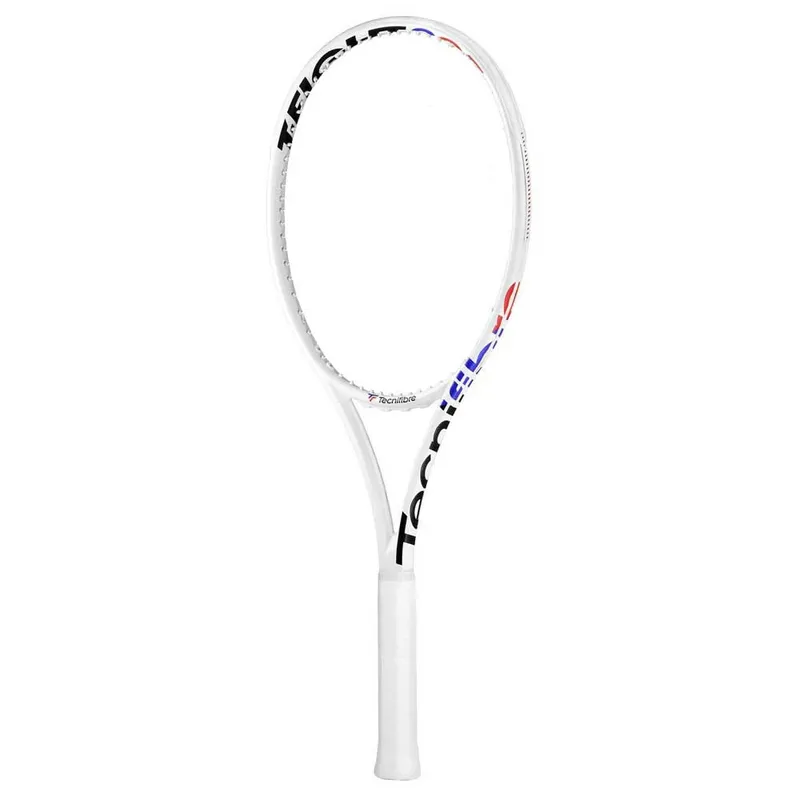
At 305g unstrung with a 98 sq in head, it offers plow-through and stability. This frame uses Isoflex technology. It varies frame stiffness around the hoop to maintain consistency even when you hit off-center. It is designed for players who want to dictate the point with precision.
Tempo 298 Iga: The Agile Weapon
This is the signature frame of World No. 1 Iga Swiatek. The weight specification is incredibly specific: 298g. It isn't rounded up to 300g because Iga wanted a very specific balance of maneuverability and stability.Designed for fast swing speeds, this 98 sq in frame allows for massive racket head acceleration. Do you play an aggressive, modern game? If head speed generates your power, the Tempo 298 Iga is tuned exactly for you.
Watch: Tecnifibre Tempo 298 Iga 4 1/4"
TF-X1 300: The Powerhouse
If the T-Fight is about control, the TF-X1 300 is about effortless power and comfort. With a 100 sq in head and 300g weight, this is Tecnifibre's answer to the "tweener" category like the Pure Drive.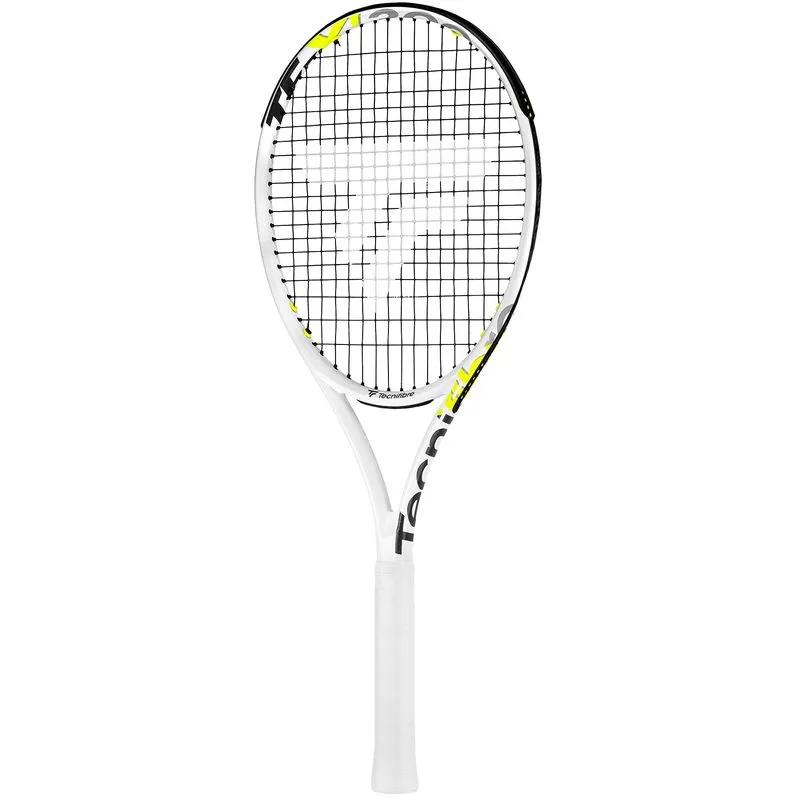
It features a rounded beam for aerodynamics and raw power output. However, the standout feature is comfort. It is more dampened than its siblings, offering pop without harsh feedback.
TF40 305 16M: The Precision Tool
For the purists, the TF40 305 16M brings back the classic feel. It features a square beam geometry, which offers superior stability and connection to the ball compared to rounded aerodynamic beams.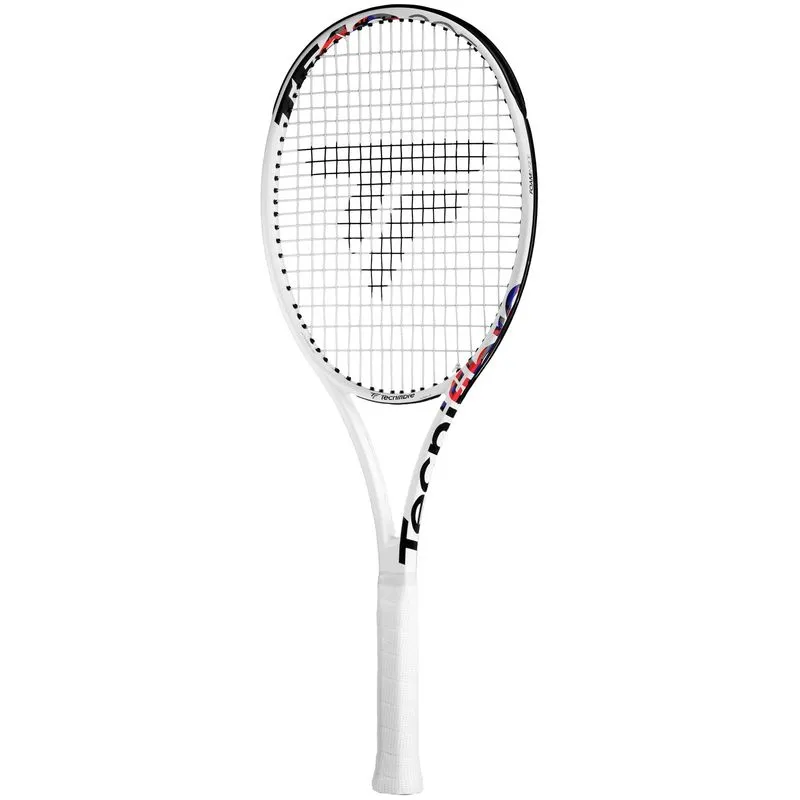
It is strictly a control-oriented racket. While the 16x19 pattern (16M) allows for good spin, the primary focus here is placing the ball on a dime. It feels crisp, plush, and incredibly stable at the net.
T-Fit Storm 265: The Value Choice
Tecnifibre doesn't ignore the recreational market. The T-Fit Storm 265 is a lightweight (265g), forgiving option with a larger 102 sq in head size.It is constructed with graphite and aluminum, making it durable and affordable. This is the perfect entry point for beginners. It helps get the ball over the net without requiring perfect technique.
Inside the Frame: Isoflex, X-Damp, and Dynacore Technology
Tecnifibre frames are often identified by a crisp, modern feel, driven by three key technologies.
Isoflex is their solution to the sweet spot problem. By making the frame stiffer in shorter strings and softer in longer strings, the string bed flexes consistently. This means a ball hit near the frame behaves more like a ball hit in the center.
X-Damp is exclusive to the TF-X1 line. It is a steel mass placed inside a customized elastomer pocket within the handle. It disperses low-frequency vibrations significantly better than standard handle systems, protecting the arm while maintaining power.
Dynacore is a braiding technology used in their graphite layup. It creates a unique blend of flexibility and torsional stability. It prevents the "noodle" feeling you get with some soft rackets, ensuring the frame recovers its shape instantly after contact.
Performance Analysis: The Crisp Feel of T-Fight vs. TF-X1 Power
When you hit with a Tecnifibre, the overwhelming sensation is usually "crispness." They generally offer more direct feedback than a Wilson Clash or a Head Boom. You know exactly where the ball is on the string bed.
The TF40 and T-Fight require you to bring your own power. They are low-powered, demanding frames that reward full swings. In contrast, the TF-X1 offers "free points." The ball launches off the string bed with pace, but you sacrifice some of that laser-guided control found in the square-beam models.
Price Breakdown: Investing in T-Fight vs. T-Fit Storm Value
Tecnifibre offers a wide spectrum of pricing.
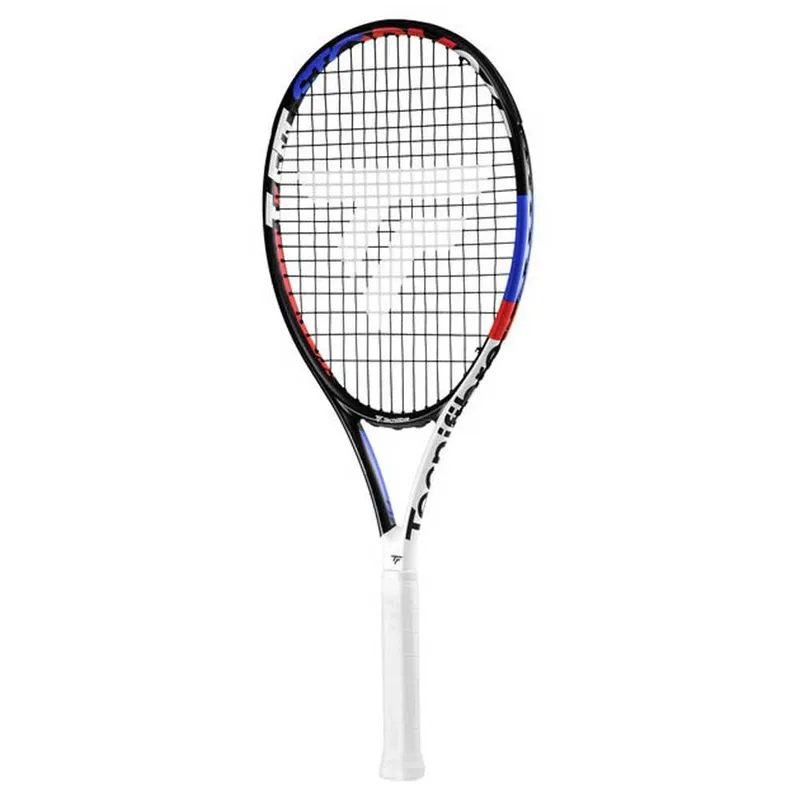
- Entry Level: The T-Fit series is highly accessible, usually ranging from $50 to $90. These often come pre-strung.
- Performance Level: The T-Fight, TF40, and Tempo lines sit in the premium tier, typically costing between $230 and $269 unstrung.
- Value: The TF-X1 can sometimes be found slightly cheaper than the main tour frames, offering a good middle ground for club players.
Which Player Type Should Choose a Tecnifibre Racket?
| Player Type | Recommended Model | Why? |
|---|---|---|
| Advanced Baseline Grinder | T-Fight ISO 305 | Stability and controlled spin for long rallies. |
| Aggressive All-Court | Tempo 298 Iga | Fast handling for quick transitions and head speed. |
| Classic S & V / Flat Hitter | TF40 305 16M | Square beam stability and ultimate precision. |
| Club Doubles / Power Seeker | TF-X1 300 | Forgiving sweet spot and easy power generation. |
| Beginner / Junior Transition | T-Fit Storm 265 | Lightweight and forgiving large head size. |
Frequently Asked Questions About Tecnifibre Rackets
Are Tecnifibre rackets good for arm pain? expand_more
Yes, specifically the TF-X1 line. The X-Damp technology in the handle filters out harmful low-frequency vibrations around 100Hz. It reduces arm strain while retaining "good" vibrations for feel.
What is the difference between T-Fight and TF40? expand_more
The main difference is beam shape. The TF40 has a square beam, which offers a classic, softer, and more controlled feel. The T-Fight has a more elliptical/hybrid cross-section, which provides slightly more power, spin, and a crisper, more modern response.
Does Iga Swiatek actually use the Tempo 298? expand_more
Yes, Iga actually uses the Tempo 298 mold. This differs from pros who use "paint jobs" on old frames. The commercially available racket is built to her specific weight and balance requirements, which is rare in the retail market.
Why is the T-Fight ISO 305 pattern 18x19? expand_more
The 18x19 pattern is a hybrid setup. It keeps the control of a dense 18x20 pattern. However, open cross strings allow for better spin generation and a higher launch angle.