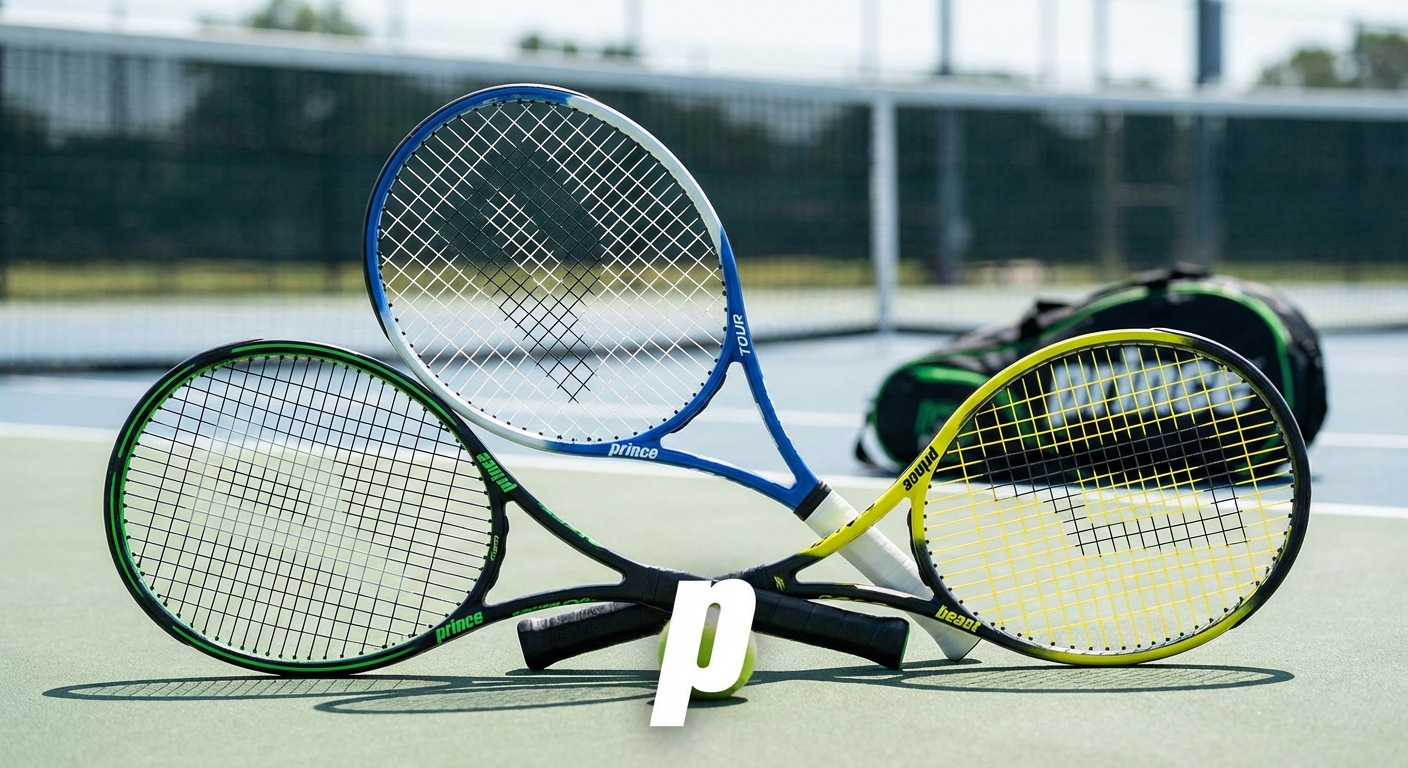

You’ve probably been there: standing at the baseline, staring down a heavy serve, and wondering if your racquet is actually helping you or holding you back. Choosing a new frame isn't just about picking a color or following a pro endorsement; it’s about finding that extension of your arm that translates your intent into reality. Today, we’re looking at two heavy hitters in the control category that approach the game from very different angles: the Prince Tour 98 (which, interestingly, sports a surgical 95 square inch head in this G1 configuration) and the Yonex Percept 100.
These two racquets represent a fascinating fork in the road for the serious player. On one hand, you have the Prince Tour 98, a carbon fiber powerhouse built for the purist who demands absolute precision and has the footwork to back it up. On the other, we have the YONEX Percept 100, a high-tech marvel that uses advanced vibration filtering and a unique head shape to maximize the sweet spot without sacrificing the "feel" that advanced players crave. Whether you’re looking to shave points off your unforced error count or you want a frame that won't leave your arm buzzing after a three-set marathon, this comparison is for you.
We’re going to dive deep into the specs, the on-court performance, and the long-term value of these two frames. By the time we’re done, you’ll know exactly which one deserves a spot in your tennis bag and which one might be a bit too much (or too little) for your current skill level.
Our Top Pick

Prince
Prince Tour 98 Tennis Racquet G1
Best Overall:
If you are an advanced player who prioritizes surgical precision and wants the best value for your money, the Prince Tour 98 is the winner. At $187.00, it offers professional-grade carbon fiber construction and a compact 95 sq inch head that rewards clean hitting like few other racquets on the market.
| Feature | Prince Tour 98 | Yonex Percept 100 |
|---|---|---|
| Our Score | 9.8/10 | 8.8/10 |
| Price | $187.00 | $294.00 |
| Head Size | 95 sq inches | 100 sq inches |
| Weight (Unstrung) | 305g | 300.5g (10.6 oz) |
| Material | Carbon Fiber | Graphite / 2G-Namd / Servo Filter |
| Length | 27 inches | 27 inches |
| Grip Type | RESI TEX PRO | Yonex Synthetic |
| Skill Level | Advanced | Intermediate to Advanced |
| String Pattern | Not Specified | 16 x 19 |
| Beam Width | Not Specified | 23 mm |
| Balance Point | Not Specified | 320 mm |
Head Size and Sweet Spot: Prince Tour 98 vs Yonex Percept 100
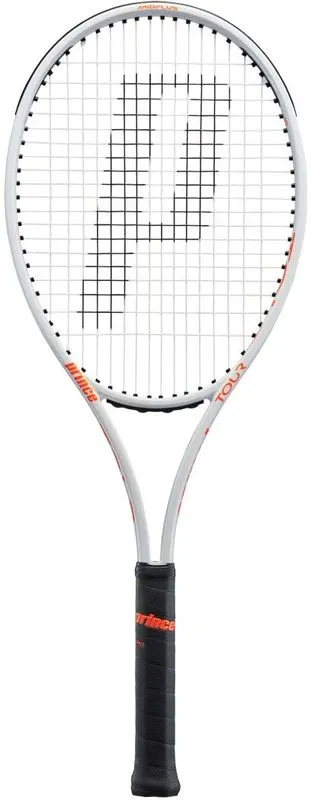
The most immediate difference you’ll notice between these two is the head size. The Prince Tour 98, despite its name, comes in with a compact 95-square-inch head. In the modern game, where 100 square inches has become the standard, a 95-square-inch head is a statement of intent. It tells you that this racquet is for the "ball-striker." When you hit the sweet spot on the Prince, the sensation is incredibly pure. The smaller surface area means there’s less "trampoline effect," giving you a direct, linear response.
If you aim for the corner, the ball goes to the corner. However, the margin for error is slim. If your footwork is lazy and you catch the ball off-center, the Prince will let you know with a significant drop in power and a bit of a jar to the arm. This is a frame that demands concentration but rewards it with pinpoint accuracy.
The Yonex Percept 100 takes a completely different approach. It features the classic Yonex Isometric head shape, which squared-off at the 10, 2, 4, and 8 o'clock positions. This design is intended to make the main and cross strings a more similar length, effectively expanding the sweet spot. When you compare the 100-square-inch head of the Percept to the 95 of the Prince, the difference in "forgiveness" is night and day. The Percept 100 feels much more generous on defensive stabs or when you’re stretched out wide and can’t perfectly time the shot.
Material Science and Vibration: Prince Tour 98 vs Yonex Percept 100
Watch: Prince Tour 98 Tennis Racquet G1
The Prince Tour 98 relies on a high-quality carbon fiber frame. Carbon fiber is known for its excellent strength-to-weight ratio and its ability to provide a crisp, stiff response. Prince has paired this with the RESI TEX PRO grip, which helps to dampen some of the harshness inherent in a stiff carbon frame. When you're playing with the Prince, the feedback is very "raw." You feel exactly what the ball is doing on the strings. For an advanced player, this feedback is vital for touch shots and drop volleys.
Yonex, however, has gone all-in on material technology with the Percept 100. They’ve introduced the "Flexcon System," which is a fancy way of saying they’ve engineered the racquet to flex in specific ways. The standout feature here is the "Servo Filter." This is a transparent film placed between layers of graphite that acts like a shock absorber. It’s designed to filter out the high-frequency vibrations that cause "tennis elbow" while leaving the low-frequency vibrations that provide "feel."
Furthermore, the Yonex uses 2G-Namd Flex Force, a specialized graphite that snaps back quickly after impact. This means you get the comfort of a flexible racquet but the ball speed of a stiffer one. In terms of pure technology and arm protection, the Yonex Percept 100 wins hands down. The Servo Filter is a legitimate advancement in racquet design. If you have a history of wrist or elbow issues, the Yonex is worth the extra investment.
Power and Control Dynamics: Prince Tour 98 vs Yonex Percept 100
The Prince Tour 98 is a heavy hitter. At 305 grams (unstrung), it has enough mass to stand up to heavy pace. Because the head is smaller (95 sq in), the air resistance is lower, allowing you to swing through the air faster. This "swing speed" translates into significant power potential, provided you have the strength to accelerate the frame. However, the primary focus of the Prince is control. The dense feel of the carbon fiber and the smaller string bed mean you can swing out on the ball without fearing it will fly long.
The Yonex Percept 100 is slightly lighter at 300.5 grams, but it feels incredibly stable thanks to its 23mm beam width. Usually, a 100-square-inch racquet risks being too "launchy" (sending the ball too high and long), but the Percept is specifically tuned for control. Yonex describes it as an "extension of the arm." In my experience, the Percept 100 has a very predictable launch angle. You don't get those "hot spots" where the ball suddenly flies an extra three feet.
It’s more of a "point-and-shoot" frame than the Prince, which requires more technique to harness its power. Choose the Prince if you are a "big hitter" who likes to dictate play with heavy, flat shots. Choose the Yonex if you are a counter-puncher or an all-court player who relies on variety, spin, and precision placement rather than raw power.
Maneuverability and Net Play: Prince Tour 98 vs Yonex Percept 100
Watch: YONEX Percept 100 Tennis Racquet - Olive Green 4 3/8"
At the net, the differences between these two become even more apparent. The Prince Tour 98, with its smaller head, is incredibly "whippy." It’s easy to maneuver in quick volley exchanges. Because the frame is so stable, you can just block back heavy passing shots with minimal effort. The RESI TEX PRO grip provides a very direct connection to the hand, making it easy to feel the angle of the racquet face for delicate touch volleys.
The Yonex Percept 100, while slightly larger, is no slouch at the net. The 320mm balance point makes it feel light in the hand, and the Isometric head shape provides a bit more surface area for those "panic volleys" when the ball is fired right at your chest. The Servo Filter technology is particularly noticeable on volleys; it takes the "sting" out of off-center hits, allowing you to maintain control even when you’re slightly out of position.
For pure "feel" and surgical placement, I prefer the Prince. There is something about a 95-square-inch head at the net that just feels right for an old-school volleyer. However, for the modern doubles player who needs to cover a lot of ground and deal with high-velocity shots, the Yonex Percept 100 offers a more forgiving and comfortable experience.
Build Quality and Aesthetics: Prince Tour 98 vs Yonex Percept 100
Prince has always been known for a certain "no-nonsense" build quality, and the Tour 98 is no exception. The carbon fiber finish is sleek and professional. It feels like a tool designed for a specific job. The RESI TEX PRO grip is one of the better stock grips on the market, offering a good balance of tackiness and cushion.
Prince Tour 98 Tennis Racquet G1 - Pros & Cons
thumb_up Pros
- check_circle Exceptional Value: One of the best price-to-performance racquets available.
- check_circle Surgical Precision: The 95 sq inch head is a dream for accurate ball-strikers.
- check_circle High-End Materials: Pure carbon fiber construction provides a crisp feel.
- check_circle Maneuverability: Very easy to whip through the air and position at the net.
- check_circle Stability: Holds up exceptionally well against heavy hitters.
thumb_down Cons
- cancel Demanding: Small sweet spot requires excellent footwork and timing.
- cancel Unstrung: Must factor in additional cost for strings and labor.
- cancel Less Forgiving: Off-center hits lose significant depth and feel harsh.
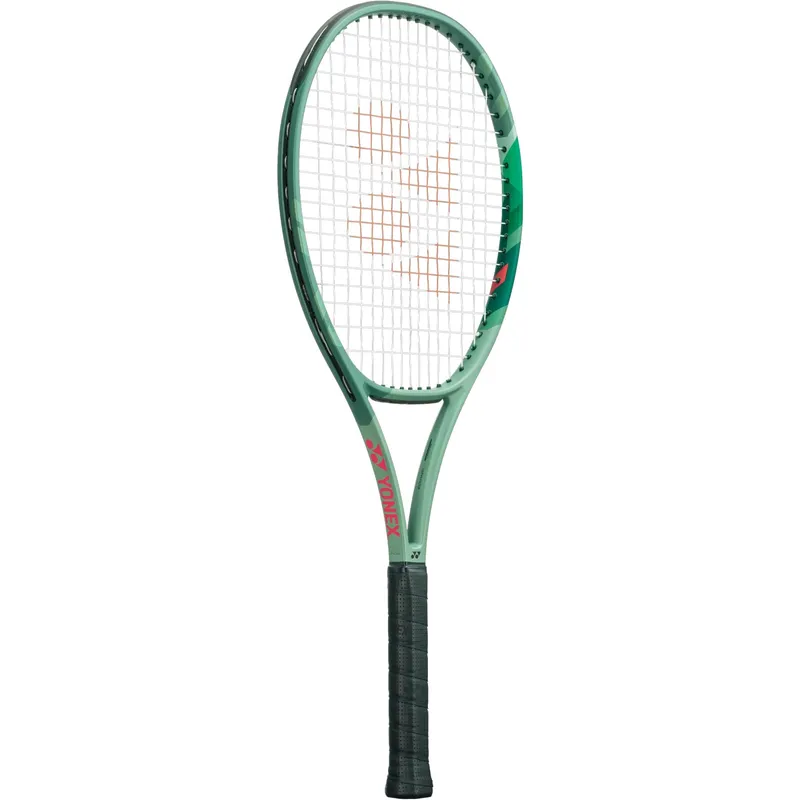
Yonex, on the other hand, is the gold standard for quality control in the tennis industry. Their racquets are manufactured in Japan with incredibly tight tolerances. When you buy two Yonex racquets, they are almost guaranteed to have the exact same weight and balance. The Percept 100 comes in a stunning "Olive Green" finish that looks sophisticated and modern.
YONEX Percept 100 Tennis Racquet - Olive Green 4 3/8" - Pros & Cons
thumb_up Pros
- check_circle Supreme Comfort: Servo Filter and Flexcon system are very arm-friendly.
- check_circle Large Sweet Spot: Isometric head shape provides a generous hitting area.
- check_circle Predictable Control: Consistent launch angle and feel across the string bed.
- check_circle Build Quality: Japanese manufacturing ensures incredible consistency.
- check_circle Versatility: Performs well at the baseline, net, and on serve.
thumb_down Cons
- cancel Expensive: At $294, it is a significant financial investment.
- cancel Unstrung: Requires professional stringing after purchase.
- cancel Learning Curve: The "filtered" feel can take time to adjust to.
Final Verdict: Which Racquet Should You Choose?
The Prince Tour 98 is a specialist's tool. It is for the player who finds modern 100-inch racquets too "mushy" or "unpredictable." It is a racquet that demands your best but rewards you with a level of precision that is frankly addictive. At $187, it is a steal for the right player.
The Yonex Percept 100 is the evolution of the modern player's racquet. It takes the control and feel of a traditional frame and wraps it in a package that is forgiving, comfortable, and high-tech. While the $294 price is steep, the quality control and the arm-saving technology make it a worthwhile investment for the serious intermediate or advanced player.
Is the Prince Tour 98 actually 95 square inches? expand_more
Yes, according to the specific G1 model specifications, this version of the
Can an intermediate player use the Prince Tour 98? expand_more
While possible, it’s not recommended unless the player has very good technical foundations. An intermediate player would likely find more success with the
Does the Yonex Percept 100 come with strings? expand_more
No, the
Which racquet is better for spin? expand_more
The
How does the Servo Filter in the Yonex actually feel? expand_more
It feels "clean." It filters out jarring high-frequency vibrations while maintaining the low-frequency vibrations that provide essential "feel" for the ball.