Dunlop Tennis: From McEnroe’s Max 200G to Modern SX 300 and FX 500 Engineering
If you’ve been hanging around the courts as long as I have, the name Dunlop hits you with a wave of nostalgia. We aren't just talking about a logo painted on a string bed; we are talking about the heritage that fueled legends. Think about John McEnroe’s touch or Steffi Graf’s dominance.
They built their legacy on wood and early graphite frames that defined an era. But don't make the mistake of thinking this brand is stuck in the past. Since coming under the umbrella of Sumitomo Rubber Industries, the same giant behind Srixon, Dunlop has undergone a massive evolution.
They have successfully bridged the gap between their heritage of "feel" and the modern demands for spin and velocity. It is a unique blend of British tennis aristocracy and meticulous Japanese manufacturing.
What is the Engineering Philosophy Behind the Dunlop CX 400 Tour and FX 500?
When Srixon took over, things got precise. Really precise. The philosophy shifted from just making good rackets to "Powered by Srixon" engineering. In the golf world, Srixon is known for obsession with detail, and they brought that same energy to the tennis court.
The current brand philosophy rests heavily on control and player connection. While other brands are chasing raw, uncontrollable power, Dunlop focuses on "feel." They want you to know exactly where that ball is leaving the string bed. It’s about creating frames that don’t just launch the ball, but help you place it.
Comparing the Dunlop SX 300, FX 500 v23, CX 400 Tour, and LX 800
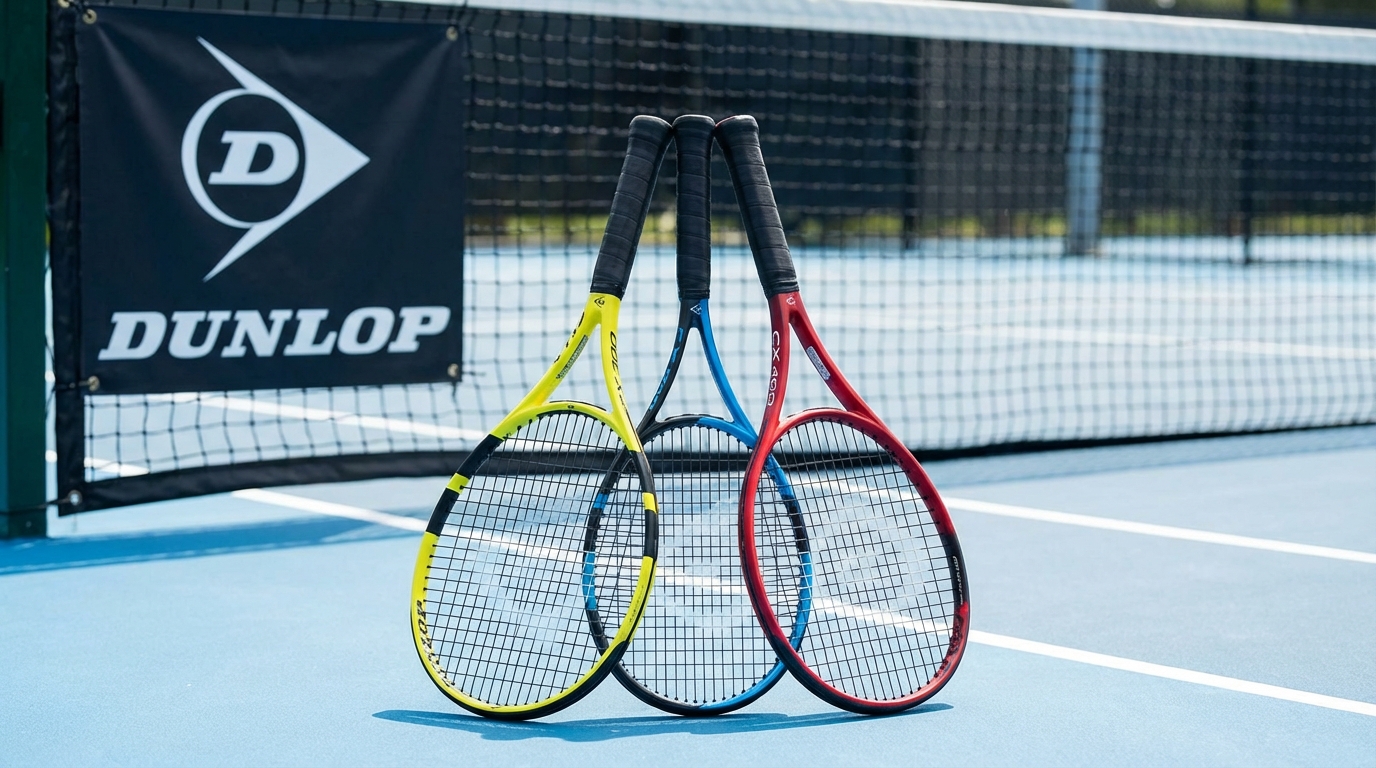
Navigating the current lineup can be tricky if you don't know the code. They’ve split their offerings into distinct silos: SX for Spin, FX for Force (Power), CX for Control, and LX for Luxury (Comfort). Let's strip away the marketing speak and look at the actual specs.
Why Does the Dunlop SX 300 Racket Dominate the Spin Game?
If you want to rip the cover off the ball with topspin, the Dunlop SX 300 is your weapon. Weighing 300g (10.6 oz), this frame is designed to generate rotation. It features a standard 16x19 string pattern. However, the spacing uses "Spin Boost" technology to allow main strings to slide more.
Watch: Dunlop SX 300 Tennis Racquet Navy G3
The yellow-and-black aesthetic screams modern tennis. It’s not just about hitting hard; it’s about hitting heavy. The ball dips into the court late, pushing your opponent back. If you play a baseline grinder game, this is where you start looking.
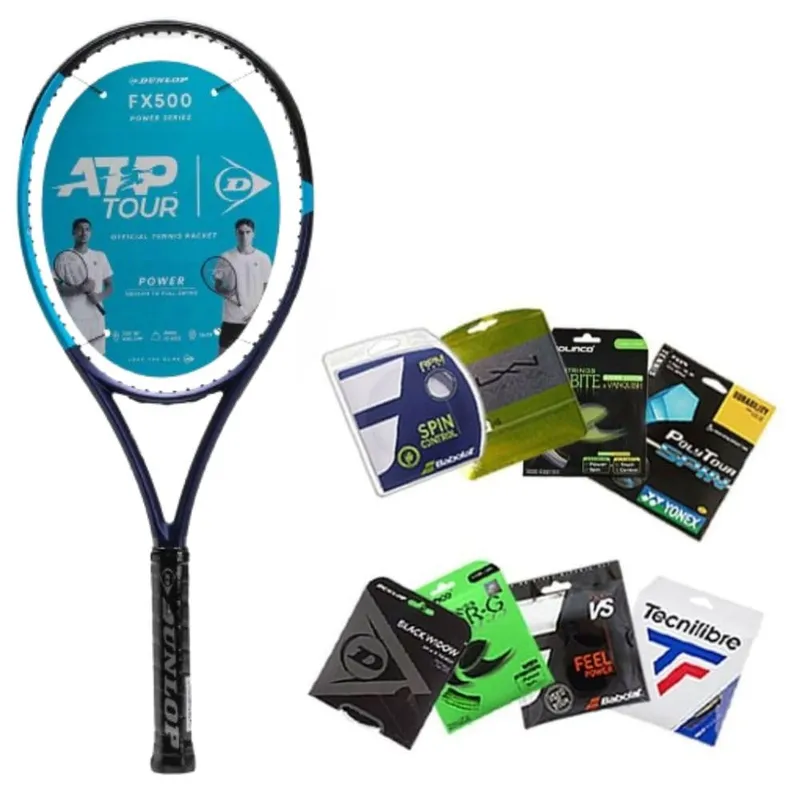
How Does the Dunlop FX 500 v23 Generate Massive Power?
The Dunlop FX 500 v23 is the blue blur in the lineup. This is for the player who wants to end the point quickly. With a 100 sq in head and 10.6 oz weight, it sits in the "golden spec" range for intermediate to advanced players.
The tagline is "Strike with Speed, Power and Comfort," and the specs back it up. The beam is firmer here to transfer energy directly. It’s a 16x19 pattern, but feels livelier than the FX. If you struggle to hit winners, the FX 500 v23 provides extra pop.
Is the Dunlop CX 400 Tour the Best Racket for Precision and Control?
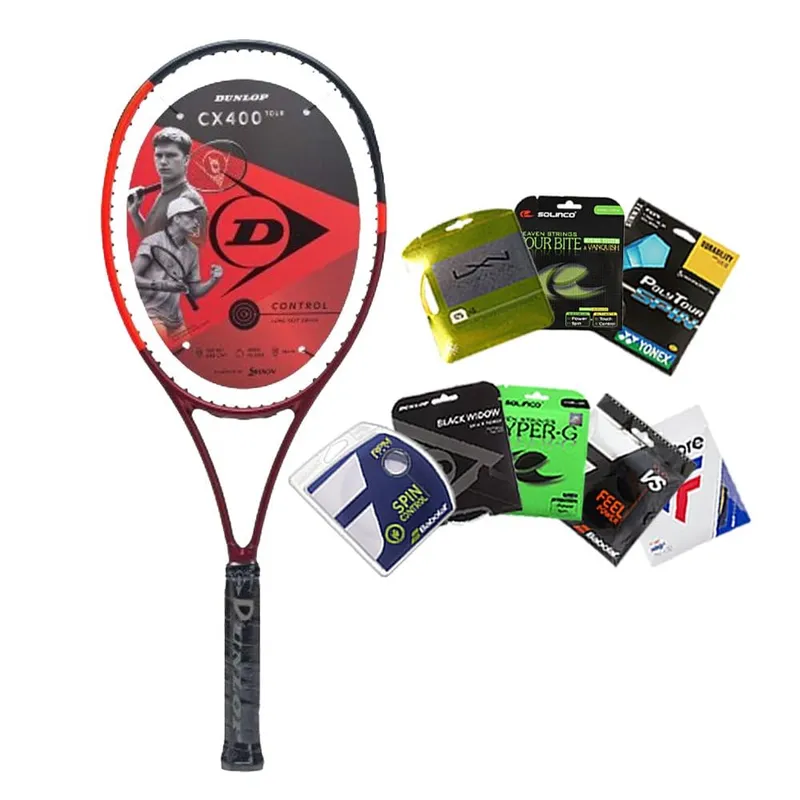
This is the red series, and it’s arguably the soul of the brand. The Dunlop CX 400 Tour is designed for "Precision Focus." It keeps the 100 sq in head size but manages the weight distribution to be more Head Light.
At 300g, it matches the SX and FX weight. Yet, the balance makes it faster and more maneuverable at the net. This is a control-oriented frame. It doesn't give free power; you must bring your own swing speed. But when you do, accuracy is laser-sharp.
Watch: Dunlop Sports CX 400 Tour Tennis Racket
Why is the Dunlop LX 800 Considered the King of Comfort Rackets?
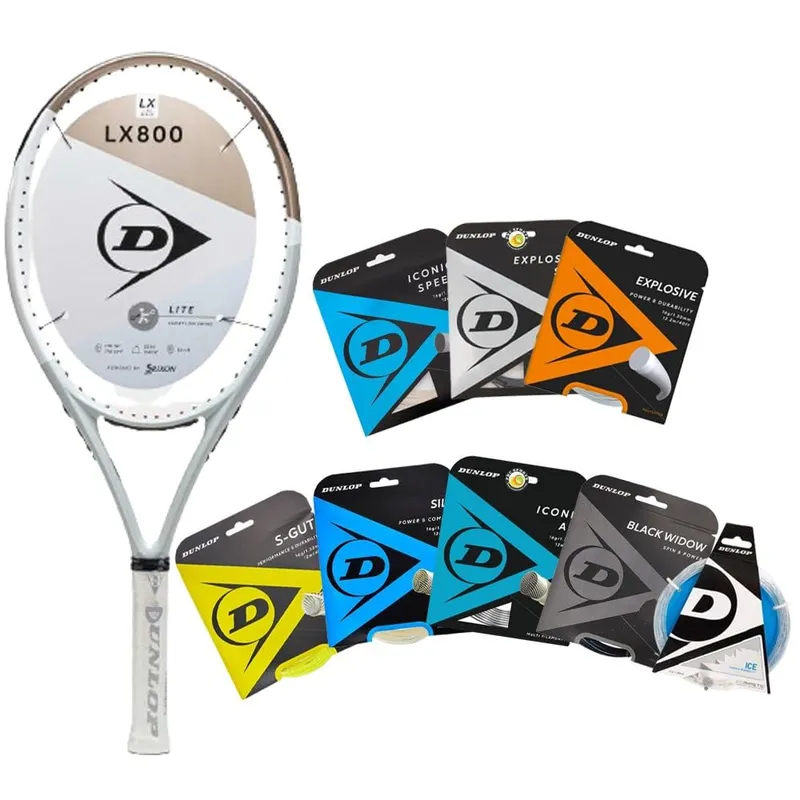
Sometimes, you just want a buttery feel and a massive sweet spot. Enter the Dunlop LX 800. This is an oversize frame at 110 sq in, giving you a huge margin for error. It is significantly lighter than the others, coming in at just 9.5 oz unstrung.
The LX 800 utilizes a 16x18 string pattern, which opens up the string bed for easy depth. But the real story here is the Flex Touch Resin and vibration reduction technology. It’s built to save your arm. If you have a shorter swing or nagging elbow issues, this racket does the heavy lifting for you.
| Model | Head Size | Weight (Unstrung) | Pattern | Primary Focus |
|---|---|---|---|---|
| Dunlop SX 300 | 100 sq in | 300g (10.6 oz) | 16x19 | Spin |
| Dunlop FX 500 v23 | 100 sq in | 10.6 oz | 16x19 | Power/Speed |
| Dunlop CX 400 Tour | 100 sq in | 300g (10.6 oz) | 16x19 | Control/Precision |
| Dunlop LX 800 | 110 sq in | 9.5 oz | 16x18 | Comfort/Oversize |
Analyzing Sonic Core Tech in the Dunlop FX 500 v23 and LX 800
Dunlop doesn't just slap graphite together; they use some interesting compounds to alter how the racket feels upon impact. The headliner here is the Sonic Core with Infinergy.
Developed by BASF, Infinergy is the same material used in high-end running shoes (think Adidas Boost). Dunlop places this material at the 10 and 2 o'clock positions of the hoop. It provides incredible rebound properties while damping shock. It’s elastic, durable, and helps the racket feel solid without feeling like a stiff board.
How do Power Boost Groove and Spin Boost+ Work in the FX 500 and SX 300?
In the Dunlop FX 500 v23, you'll find the Power Boost Groove. This is a groove cut into the frame under the grommet strip. It allows the grommets and strings to deform more upon impact, creating a trampoline effect for power.
Watch: Dunlop FX 500 v23 Tennis Racquet 4 1/4
In contrast, the Dunlop SX 300 uses Spin Boost+ Grommets. These allow the main strings to slide more in specific directions, snapping back to impart rotation on the ball. It’s mechanical engineering applied directly to the string bed.
What creates the "Spin Boost" in the Dunlop SX 300? expand_more
The spin comes from a combination of an aerodynamic shaft and specifically designed grommets. The grommets allow the main strings to slide and snap back upon impact. This movement grabs the felt of the ball, imparting higher RPMs (revolutions per minute) without requiring you to change your stroke mechanics significantly.
For the Dunlop LX 800, the focus shifts to Flex Touch Resin. This is a high-elasticity compound used to smooth out the harsh vibrations that come with lighter, stiffer frames. It keeps the power high but the impact on your joints low.
How does the Dunlop LX 800 help with tennis elbow? expand_more
The LX 800 helps in two ways: weight and material. At 9.5 oz, it is easy to maneuver, reducing strain on the forearm muscles during late swings. Secondly, the Flex Touch Resin and 110 sq in head absorb significant shock. This prevents vibrations from traveling up your arm.
Performance Review: Feel and Control of the Dunlop CX 400 Tour vs FX 500 v23
How does all this tech translate to the court? In my experience, Dunlop rackets generally offer a more "muted" and plush feel compared to brands like Babolat.
The Dunlop CX 400 Tour offers distinct feedback. You feel the ball dwell on the strings. It connects your hand to the shot. The FX 500 v23 sacrifices some connection for raw speed. However, thanks to Sonic Core, it rarely feels jarring.
Quality control is another area where the Japanese engineering shines. The weight and balance tolerances between two of the same frames are usually tighter than many competitors. You rarely get a "lemon" that feels totally different from the demo you tried.
Price Range and Value: Is the Dunlop SX 300 or LX 800 Worth the Investment?
Here is the kicker: Dunlop often undercuts the big three (Wilson, Babolat, Head) in price, while offering equal or better build quality. You are paying for the racket, not just the marketing budget.
For the amount of technology packed into frames like the Dunlop SX 300 or the Dunlop LX 800, the value proposition is high. They are durable, paint finishes are high quality, and the grommet systems hold up well over time.

Which Players Should Choose the Dunlop CX 400 Tour, FX 500, or SX 300?
If you are a player who values "feel" and hates a brassy, stiff vibration, Dunlop is your brand.
- Choose the Dunlop CX 400 Tour if you are an advanced player who wants to paint the lines.
- Grab the Dunlop FX 500 v23 if you need help hitting deep into the court.
- Pick up the Dunlop SX 300 if you play a modern, heavy-spin game.
- Go for the Dunlop LX 800 if you play doubles, have a compact swing, or want to protect your arm.
Our Top Pick

DUNLOP
Dunlop SX 300 Tennis Racquet Navy G3
Editor's Choice for Spin: The Dunlop SX 300 takes the crown. It generates heavy, dipping shots without sacrificing the plush feel Dunlop is famous for.
Watch: Dunlop LX 800 16x18 Tennis Racquet 4 1/4
Is the Dunlop FX 500 v23 too powerful for beginners? expand_more
Not necessarily. While it is a power-oriented frame, the 100 sq in head and 10.6 oz weight are manageable for athletic beginners. However, it rewards players who can already generate some racquet head speed. If you are a total novice, the power might lead to overhitting until you learn to control it with topspin.
Why choose the Dunlop CX 400 Tour over a standard CX 200? expand_more
The CX 400 Tour is the bridge between classic control and modern power. The standard CX 200 has a thinner beam and smaller head, making it very demanding. The CX 400 Tour provides that classic "box beam" feel. But its thicker beam and 100 sq in head make it more forgiving and powerful.