You’re standing at the baseline, the score is deuce, and you need a serve that hits the T with surgical precision. Or maybe you’re pulled wide and need to dip a heavy topspin cross-court pass right at your opponent's feet. In these moments, the racquet in your hand isn't just equipment; it’s an extension of your intent. If you’ve narrowed your search down to the Babolat Pure Strike 98 16x19 and the Yonex VCORE 98, you’re already looking at two of the most refined "player's frames" on the market.
Both of these racquets occupy that coveted 98-square-inch head size category—the "sweet spot" for intermediate and advanced players who find 100-inch frames too launchy and 95-inch frames too demanding. While they share similar DNA on paper, their personalities on the court couldn't be more different. One is a white-and-red precision instrument designed to dominate through directional control, while the other is a spin-focused masterpiece engineered to weaponize RPMs.
In this deep dive, we’re going to look past the marketing jargon. I’ve spent hours with both frames, testing them with identical poly setups to see how they handle heavy hitters, touch volleys, and the occasional frame-shanking defensive lob. Whether you’re a flat hitter looking for more "thump" or a modern baseliner who lives and dies by the heavy ball, this comparison will help you decide which of these two giants deserves a spot in your tennis bag.
Our Top Pick

Babolat
Babolat Pure Strike 98 16x19 Tennis Racquet
Quick Verdict: The Winner at a Glance
The Babolat Pure Strike 98 16x19 (4th Gen) is the superior choice for players who prioritize a connected feel and pinpoint accuracy. It feels more substantial through the air and rewards aggressive, linear swings. However, if your game is built on modern spin, high arcs, and arm-friendly dampening, the Yonex VCORE 98 is nearly impossible to beat.
| Feature | Babolat Pure Strike 98 16x19 | Yonex VCORE 98 |
|---|---|---|
| Head Size | 98 sq. in. | 98 sq. in. |
| Strung Weight | 11.4 oz (323g) | 11.2 oz (Approx 318g) |
| Balance | 320mm (Head Light) | 315mm (Head Light) |
| String Pattern | 16 x 19 (FSI Control) | 16 x 19 |
| Flex (RA) | Mid-High (Stiff/Crisp) | Mid (Flexible/Plush) |
| Material | Graphite / Natural Flax | HM Graphite / VDM |
| Jack Smash Score | 9.8 / 10 | 8.8 / 10 |
Head-to-Head Performance Analysis
Power Potential and Groundstrokes
When you’re trading blows from the back of the court, these racquets offer two very different sensations. The Babolat Pure Strike 98 is often called "The Benchmark" for a reason. Its Control Frame Technology utilizes a hybrid frame shape—square sections for stability and elliptical sections for power. When you catch the ball cleanly, the Pure Strike offers a direct, "plow-through" sensation that makes it easy to flatten out shots and go for lines. It doesn't give you "free" power like a Pure Drive, but for a player with a full swing, the power is predictable and potent.The Yonex VCORE 98, on the other hand, feels faster through the air. The frame is designed with aerodynamics in mind, allowing for higher head speeds. While it might lack the raw, heavy "thud" of the Babolat, it excels at creating a "heavy ball"—one that jumps off the court due to extreme topspin. If you struggle to keep the ball inside the lines when swinging hard, the VCORE’s ability to dip the ball late in its flight is a lifesaver.
The Battle of Spin: 16x19 vs. 16x19
Wait, if they both have 16x19 string patterns, shouldn't the spin be the same? Not quite.Babolat uses FSI Control technology, which actually tightens the string spacing slightly to enhance control. This means the Pure Strike is a "control-oriented" 16x19. It offers enough spin to keep your shots safe, but it’s not its primary mission.
The Yonex VCORE 98 is a spin specialist. Yonex has engineered the grommet holes and the frame shape (the Isometric head) to allow the strings to snap back more violently. This "snap-back" is the engine behind topspin. In my testing, the VCORE 98 produced a noticeably higher launch angle, making it easier to clear the net with margin. If you’re a "windshield wiper" style hitter, the Yonex is your best friend.
Feel, Comfort, and Vibration Dampening
This is where the 4th Generation of the Pure Strike really shines. In previous versions, some players complained that the Pure Strike was a bit too stiff, leading to arm fatigue or "tennis elbow" issues. Babolat addressed this by adding NF2 Tech—natural flax fibers integrated into the handle and frame. This provides a more muted, organic feel at impact without sacrificing the "connected" sensation that Pure Strike fans love. It’s still a crisp racquet, but the harsh vibrations are gone.Yonex has long been the king of comfort in the 98-inch category. The VCORE 98 features Vibration Dampening Mesh (VDM) wrapped around the graphite within the grip. This, combined with the inherently plusher flex of Yonex graphite, makes the VCORE 98 the more "arm-friendly" option. If you have a history of wrist or elbow issues, the Yonex is the safer bet. It feels "dampened" and "silky," whereas the Babolat feels "direct" and "communicative."
Net Play and Volleys
At the net, the Babolat Pure Strike 98 is a scalpel. Because of its slightly higher weight and the "Control Frame" stability, it resists twisting on off-center hits better than the VCORE. When you’re facing a heavy passing shot, the Pure Strike feels rock solid. You can punch volleys deep with confidence, and the feedback tells you exactly where on the string bed you made contact.The Yonex VCORE 98 is no slouch at the net, but it feels a bit more "whippy." This makes it fantastic for reflex volleys or digging out low balls at your feet. However, on high, floating volleys that you want to put away, it doesn't quite have the same "crushing" feel that the Babolat provides. The Isometric head shape does provide a larger-than-average sweet spot for a 98, which is a nice insurance policy for late volleys.
Which Racquet Fits Your Style?
The Pure Strike 98 is for you if:
- You are an aggressive "First Strike" player. You like to take the ball early and dictate play by hitting into the corners.
- You prefer a traditional feel. You want to feel the ball on the strings and value feedback over extreme dampening.
- You hit a flatter ball. While it can generate spin, this racquet's soul is in its ability to drive through the ball linearly.
- You want elite stability. The 11.4 oz strung weight provides enough mass to handle the biggest hitters at the club or tournament level.
The Yonex VCORE 98 is for you if:
- Spin is your primary weapon. You want to push your opponent back with high-bouncing topspin or carve out sharp angles.
- You value maneuverability. The slightly lighter feel and aerodynamic design make it easier to swing fast over the course of a three-set match.
- You need arm protection. You want a racquet that absorbs shock and offers a plusher, more comfortable hitting experience.
- You like a "forgiving" 98. The Isometric head shape makes the sweet spot feel more like a 100-square-inch racquet while maintaining 98-inch precision.
Pros and Cons Breakdown
Babolat Pure Strike 98 16x19
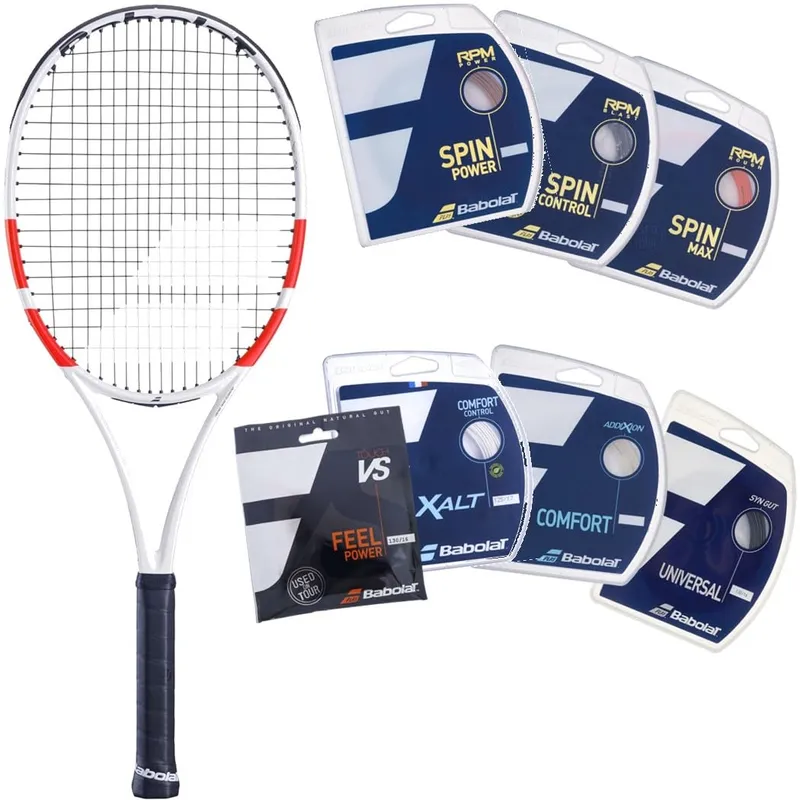
The 4th Generation of this frame has refined what was already a legendary control racquet. By integrating natural flax fibers, Babolat has managed to keep the "Strike" DNA while removing the harshness that plagued earlier models. It remains a benchmark for stability in the 98-square-inch category.
Babolat Pure Strike 98 16x19 Tennis Racquet - Pros & Cons
thumb_up Pros
- check_circle Surgical Precision: One of the most accurate racquets in its class.
- check_circle Improved Feel: The addition of flax fibers (NF2 Tech) makes the 4th Gen much more pleasant to play with.
- check_circle Stability: It holds its own against heavy pace, feeling very "plow-through" oriented.
- check_circle Price-to-Performance: At $139.00, this is an incredible value for a professional-grade frame.
thumb_down Cons
- cancel Demanding: It requires a full, fast swing to get the most out of it; it won't do the work for you.
- cancel Crispness: Some may still find it a bit too "stiff" compared to the plusher Yonex feel.
- cancel Colorway: The bold white, red, and black is polarizing.
Yonex VCORE 98
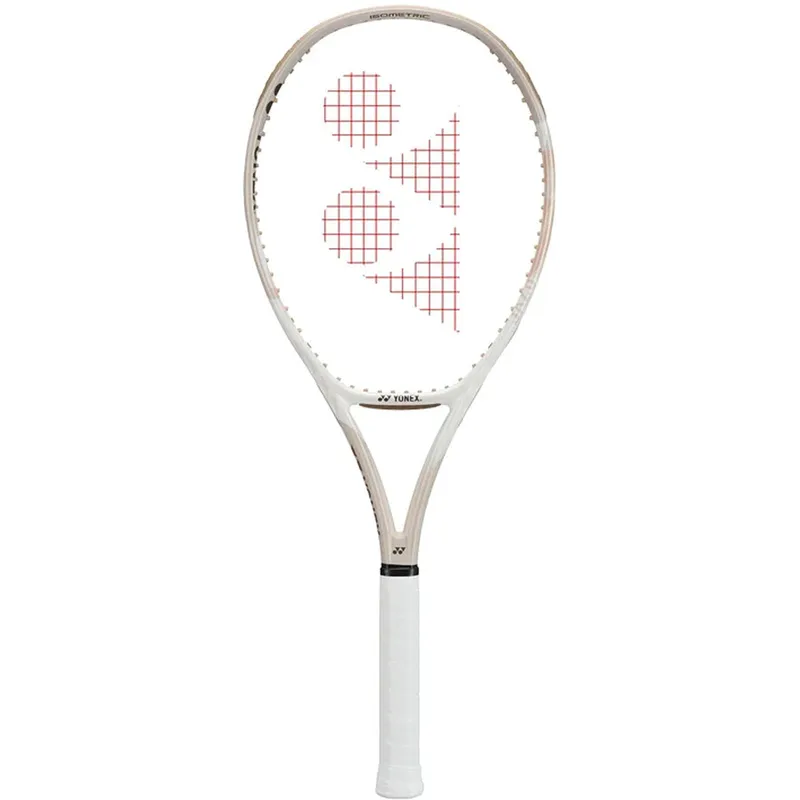
The VCORE 98 continues to be the gold standard for players who want to weaponize spin. The combination of the Isometric head shape and aerodynamic frame makes it one of the most maneuverable 98s on the market, allowing for extreme head speed and heavy topspin.
YONEX Vcore 98 Tennis Racquet - Sand Beige, Grip 4 - Pros & Cons
thumb_up Pros
- check_circle Spin Monster: The frame geometry and string snap-back are top-tier for spin generation.
- check_circle Comfort: Excellent vibration dampening makes it a great choice for sensitive arms.
- check_circle Maneuverability: It feels incredibly fast through the air, perfect for modern tennis.
- check_circle Build Quality: Japanese manufacturing ensures legendary consistency and tight tolerances.
thumb_down Cons
- cancel Price: Typically sits at a higher premium price point than the Pure Strike.
- cancel Launch Angle: The high launch angle can take some time to adjust to for flat hitters.
- cancel Color Options: The "Sand Beige" is unique but might not appeal to everyone.
Price and Value Comparison
When looking at the bottom line, the Babolat Pure Strike 98 currently holds a significant advantage in the "Value for Money" category. You are getting a current-generation, professional-level frame that is used by top ATP and WTA pros. It’s rare to find a racquet with this level of technology (NF2 Tech, FSI Control) at such a competitive price.
The Yonex VCORE 98 is a premium product, and its pricing reflects that. While the exact price can vary based on the retailer and specific colorway (like the Sand Beige), it generally commands a higher investment. However, for many players, the legendary Yonex "Made in Japan" quality control—where every racquet is guaranteed to be within a few grams of its spec—is worth the extra cost.
Final Verdict: Jack’s Choice
Choosing between these two is like choosing between a high-performance German sedan and a nimble Japanese sports car.
The Babolat Pure Strike 98 16x19 is the German sedan. It’s solid, stable, and built for high-speed precision. It rewards disciplined technique and provides a connected, powerful ride. For the intermediate-to-advanced player who wants to "strike" the ball with total confidence and control the point through placement, this is the winner. Its 9.8/10 score is well-deserved, especially considering the current price-to-performance ratio.
The Yonex VCORE 98 is the Japanese sports car. It’s built for agility, high RPMs, and a smooth, refined experience. It’s the better choice for the modern baseliner who uses spin as a shield and a sword. It’s more forgiving on the arm and easier to "whip" around for spectacular shots on the run.
The Final Word:
- Choose the Babolat Pure Strike 98 if you want a "player's racquet" that prioritizes control, stability, and a direct feel.
- Choose the Yonex VCORE 98 if you want to maximize your spin potential without sacrificing comfort.
Is the Babolat Pure Strike 98 too heavy for an intermediate player? expand_more
At 11.4 oz (strung), it is on the heavier side for a casual intermediate player. However, because the balance is 320mm (head light), it remains quite maneuverable. If you have full swings and are looking to move up from a lighter "tweener" racquet, the
Does the Yonex VCORE 98 really help with tennis elbow? expand_more
While no racquet can "cure" tennis elbow, the
Which string should I use with the Pure Strike 98? expand_more
Babolat recommends several options, but for this specific racquet, RPM Blast is the gold standard for control and spin. If you find that too stiff, Babolat Xalt is a fantastic choice that balances comfort with the racquet's inherent responsiveness.
How does the "Sand Beige" Yonex VCORE 98 differ from the Red version? expand_more
Cosmetically, they are different, but the specs remain the same. The Sand Beige is a special edition colorway that offers a more understated, "boutique" look on court. Under the paint, you’re still getting the same high-performance HM Graphite and VDM technology found in the standard red