You’re standing on the baseline, sun hitting the court, and you realize your old garage-sale racket just isn’t cutting it anymore. Maybe the strings feel like wet noodles, or perhaps the frame vibrates so hard your elbow hurts before the first set is even over. You know it’s time for an upgrade, but the world of tennis gear is a rabbit hole of marketing jargon and confusing specs. You want something that helps you get the ball over the net with more consistency, but you don't want to drop $250 on a professional frame that’s too heavy for you to swing.
Enter the Babolat Boost Drive and the Tecnifibre T-Fit Storm 265. These two rackets sit at very different price points, yet they both target the same demographic: players looking for a lightweight, maneuverable entry into the sport. While they might look similar from a distance, the way they perform on the court—and the way they’re built—tells two very different stories. One is a premium entry-level frame designed to grow with you, while the other is a budget-friendly option meant to get you on the court for the price of a few cans of high-end balls.
In this comparison, we’re going to peel back the layers of these two frames. I’ve spent years testing how different beam widths and flex ratings impact a player's development, and I can tell you right now that the "best" racket isn't always the most expensive one—but it’s often the one that protects your arm and rewards good technique. Let’s see how the Boost Drive and the T-Fit Storm 265 stack up when the pressure is on.
Our Top Pick

Babolat
Babolat Boost Drive Tennis Racquet 4 1/4" Grip
Best Overall:
If you have the budget, the Babolat Boost Drive is the superior choice for almost any player. Its full graphite construction and 105-square-inch head offer a level of playability and arm comfort that the Tecnifibre simply can’t match. It’s a racket you can use as a beginner and keep using well into your intermediate years.
| Feature | Babolat Boost Drive | Tecnifibre T-Fit Storm 265 |
|---|---|---|
| Our Score | 9.5/10 | 8.8/10 |
| Price | $119.00 | $49.00 |
| Head Size | 105 sq in | 102 sq in |
| Weight (Unstrung) | 250g (8.8 oz) | ~265g (9.3 oz) |
| Frame Material | Full Graphite | Graphite / Aluminum |
| String Pattern | 16 x 19 | 16 x 19 |
| Length | 27 inches | 27 inches |
| Grip Size | 4 1/4" | 4 1/4" |
| Sweet Spot | Large / Forgiving | Moderate |
| Best For | Beginners & Seniors | Budget-Conscious Beginners |
Construction and Material: The Graphite Factor
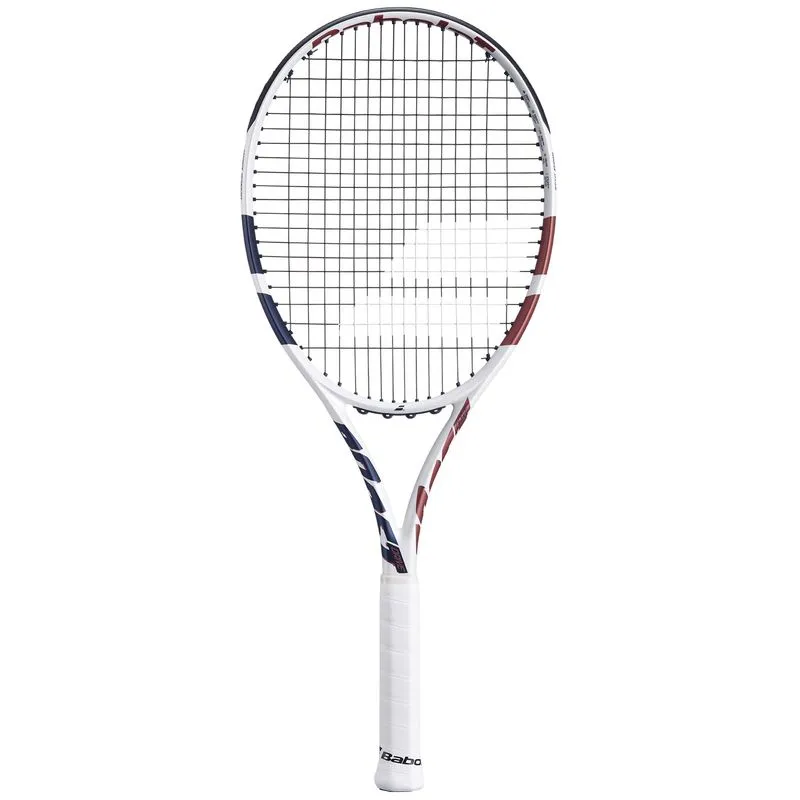
When you're looking at the price difference between these two, the primary reason for the gap is the material. The Babolat Boost Drive is a 100% graphite frame. In the tennis world, graphite is the gold standard. It’s stiff enough to provide power but flexible enough to absorb the shock of the ball hitting the strings. When you hit a ball with a full graphite racket, the "feel" is clean. You get feedback about where you hit the ball on the string bed without the "clanking" sensation that cheaper rackets often produce.
The Tecnifibre T-Fit Storm 265 uses a composite construction, specifically a graphite frame with an aluminum shaft. This is a common tactic for entry-level rackets to keep costs down. Aluminum is much cheaper to manufacture than high-modulus graphite, but it has a major downside: vibration. Aluminum doesn't dampen shock well. If you hit the ball slightly off-center with the T-Fit Storm, you’re going to feel that vibration travel up the handle and into your wrist and elbow.
For a mentor like myself, this is the biggest "red flag" for new players. If you plan on playing more than once a month, the arm-friendly nature of the Babolat’s full graphite build is worth the extra investment to prevent long-term injury like tennis elbow.
Head Size and the "Sweet Spot"
The Babolat Boost Drive features a 105-square-inch head, while the Tecnifibre T-Fit Storm 265 comes in at 102 square inches. In the world of tennis rackets, those three square inches make a noticeable difference.
A larger head size generally equates to a larger sweet spot. For a beginner, the sweet spot is your best friend. It’s the area of the strings where the racket provides the most power and the least amount of frame twisting. The 105-square-inch head of the Babolat is very forgiving. If you’re a second late to the ball and catch it near the edge of the frame, the Boost Drive still has enough "pop" to get that ball over the net.
The 102-square-inch head of the Tecnifibre is by no means small, but it requires a slightly more precise swing. It offers a bit more "control-oriented" feel in theory, but because the frame is lightweight and composite, that control is often undermined by the lack of stability. If you’re still working on your footwork and often find yourself reaching for balls, the Babolat’s extra surface area will keep more balls in play.
The Woofer System vs. Standard Grommets
Babolat has included their proprietary "Woofer System" in the Boost Drive. This is a technology they’ve used for years in their professional-grade Pure Drive and Pure Aero lines. Essentially, the Woofer System allows the strings and the frame to interact more dynamically during impact.
Instead of the strings being locked in place by the grommets, they are allowed to move slightly. This increases the "dwell time"—the amount of time the ball stays on the strings. This extra millisecond gives you more control over the direction of the shot and adds a bit of extra power through a "trampoline effect."
The Tecnifibre T-Fit Storm 265 uses a standard grommet system. It’s functional and gets the job done, but it lacks that extra bit of engineering that makes the string bed feel alive. When you play with the Babolat, the string bed feels plush and responsive. With the Tecnifibre, it feels a bit more "dead" or stiff, which can be frustrating as you try to develop a feel for the ball.
Maneuverability and Swing Weight
Both of these rackets are remarkably light. The Babolat comes in at 250 grams (unstrung), while the Tecnifibre is slightly heavier at 265 grams. For context, a professional racket usually weighs between 300 and 315 grams.
The lightness of the Boost Drive makes it incredibly easy to swing. If you’re a player with a shorter, slower swing—perhaps a senior player or a teenager moving up from a junior racket—the Boost Drive feels like an extension of your arm. You can get the racket head through the contact zone quickly without straining your shoulder.
The Tecnifibre, despite being a budget racket, actually has a decent weight-to-balance ratio. At 265 grams, it has a bit more "plow-through" than the Babolat. Plow-through is the racket's ability to resist being pushed back by a heavy incoming ball. However, because the Tecnifibre’s frame is less stable due to the aluminum components, that extra weight doesn't necessarily translate into more power. It just feels a bit more substantial in the hand.
Playability: Groundstrokes and Volleys
On groundstrokes, the Babolat Boost Drive is a joy for those who like to hit with spin. The 16x19 open string pattern, combined with the lightweight frame, allows you to brush up the back of the ball easily. You’ll find your shots dipping into the court with more consistency.
The Tecnifibre T-Fit Storm 265 performs adequately on groundstrokes, but it feels a bit "hollow." When you try to rip a big forehand, the racket can feel like it’s fluttering in your hand if you don't hit the dead center of the strings.
At the net, the Babolat wins again. Volleys require a stable frame because you’re often redirecting the power of your opponent's shot. The graphite construction of the Boost Drive handles this much better than the composite frame of the Storm 265. If you’re playing doubles and find yourself in a "reflex volley" situation, the maneuverability of the Babolat allows you to get the racket in place fast enough to make the play.
Value for Money: The $70 Question
This is where the comparison gets interesting. The Babolat is $119, and the Tecnifibre is $49. You could literally buy two Tecnifibres and a bag of balls for the price of one Babolat.
If you are a casual player who hits the court three times a year during a summer vacation, the Tecnifibre T-Fit Storm 265 is an incredible value. It’s a "real" tennis racket, not a toy, and it will serve you fine for occasional recreational play.
Pros and Cons
Babolat Boost Drive
Babolat Boost Drive Tennis Racquet 4 1/4" Grip - Pros & Cons
thumb_up Pros
- check_circle Full Graphite Construction: Superior vibration dampening and "feel" compared to composite frames.
- check_circle Woofer System: Enhances the sweet spot and provides a more forgiving string bed.
- check_circle Extremely Lightweight: Great for players with slower swing speeds or those prone to fatigue.
- check_circle Brand Heritage: You’re getting the same engineering DNA found in rackets used by Grand Slam champions.
- check_circle Longevity: This is a racket you can use for years as your skills progress.
thumb_down Cons
- cancel Price: At $119, it’s a significant jump from "big box store" rackets.
- cancel Durability: Like all ultra-light graphite frames, it can be fragile if dropped or banged against the court.
- cancel Strings: The factory strings are decent, but you’ll likely want to upgrade to a better multifilament string.
Tecnifibre T-Fit Storm 265
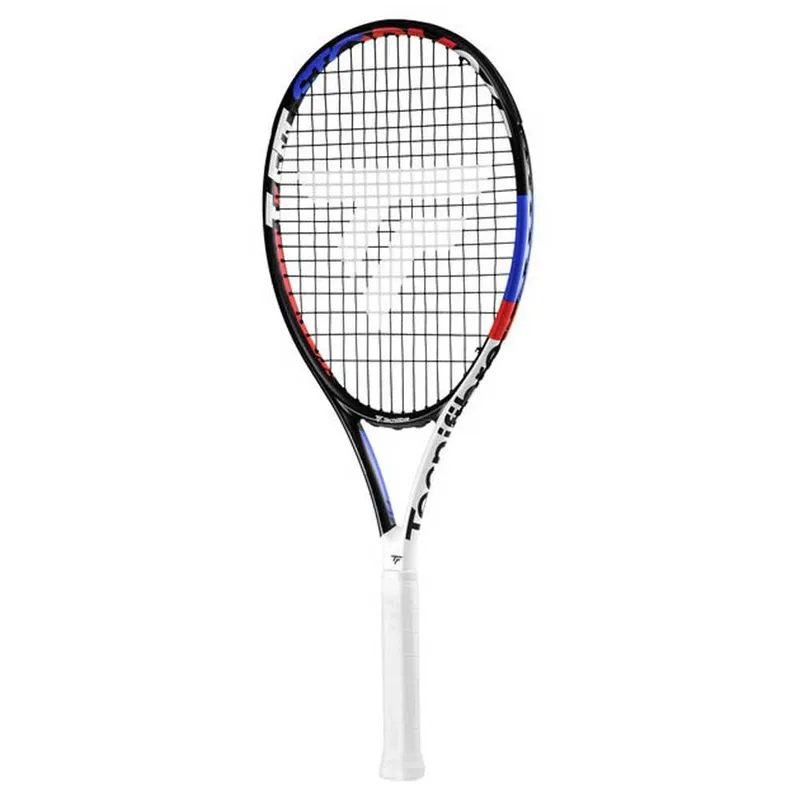
Tecnifibre T-Fit Storm 265 Tennis Racquet - Pros & Cons
thumb_up Pros
- check_circle Unbeatable Price: At $49, it’s one of the most affordable ways to get a branded racket.
- check_circle Lightweight: Easy to handle for beginners and younger players.
- check_circle Pre-Strung: Ready to take straight from the box to the court.
- check_circle Decent Aesthetics: It looks like a high-end Tecnifibre frame, which can be a confidence booster.
thumb_down Cons
- cancel Composite Material: The aluminum shaft leads to more vibration and a "clunky" feel.
- cancel Limited Growth: You will likely outgrow the performance of this racket quickly as your game improves.
- cancel Small Sweet Spot: At 102 sq in with a composite build, it’s less forgiving than the Babolat.
- cancel Single Grip Size: The 4 1/4" grip is standard, which may not fit players with larger hands.
Final Verdict: Which Racket Wins?
After looking at the specs, the materials, and the on-court performance, the winner is clear—but it depends on your goals.
Choose the Babolat Boost Drive if you are serious about learning the game, want a racket that supports good technique, and need a frame that will remain relevant as you move to an intermediate level.
Choose the Tecnifibre T-Fit Storm 265 if you are on a strict budget, play only occasionally, or are buying a racket for a teenager who might lose interest in the sport quickly.
In my experience, the Babolat Boost Drive is the "sweet spot" of the entry-level market. It gives you 90% of the performance of a $250 professional racket at less than half the price. If you can swing the extra $70, your arm—and your game—will thank you.
Is a 105-square-inch head too big for an adult? expand_more
Not at all. In fact, many senior players and recreational doubles players prefer a "mid-plus" or "oversize" head (105-110 sq in) because it provides more power on serves and more forgiveness on volleys.
Can I change the strings on these rackets? expand_more
Yes, both rackets can be re-strung. I highly recommend re-stringing the
What does "4 1/4 grip" mean? expand_more
This refers to the circumference of the handle. 4 1/4 (also called Size 2) is the most common grip size for women and men with average-sized hands. If the grip feels too small, you can always add an overgrip.
Does the weight include the strings? expand_more
The Babolat's listed weight of 250g is usually the unstrung weight. Once you add strings, it will weigh about 265-270g. In reality, both rackets feel very light and easy to maneuver in the air.