Introduction
Choosing a tennis racquet for a young or beginning player isn't just about picking a color they like. It is about finding a tool that matches their physical development, strength, and current skill level. If you hand a ten-year-old a racquet that is too heavy, you are asking for technical flaws and potential wrist fatigue. Conversely, if an athletic teenager uses a racquet designed for a toddler, they will never develop the depth or pace needed to compete.
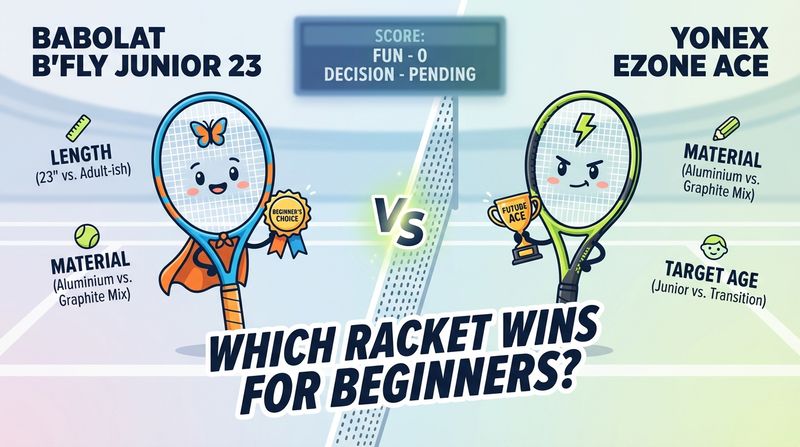
In this comparison, I am looking at two very different but highly effective options: the Babolat B'Fly Junior 23 Inch and the YONEX EZone Ace. On paper, both of these racquets carry high scores and come from legendary manufacturers like Babolat and YONEX. However, they serve different masters. One is a dedicated educational tool for children just starting their journey, while the other is a gateway into the world of performance-oriented graphite frames for older beginners and teens.
I have spent years watching players struggle with the wrong equipment. My goal here is to break down the technical specifications, the feel on the court, and the long-term value of these two frames so you can make an informed decision.
Our Top Pick

YONEX
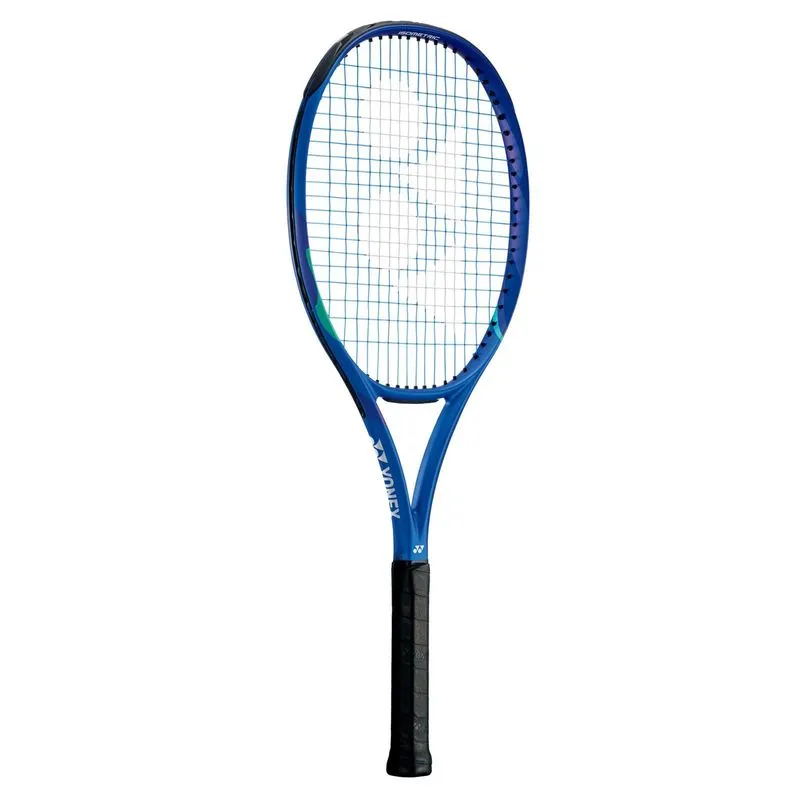
YONEX EZone Ace Tennis Racquet - 4 3/8" Grip
If you are buying for a child between the ages of 6 and 9 (roughly 49 to 53 inches tall), the Babolat B'Fly Junior 23 is the clear winner for development.
However, for teenagers or adult beginners who want a racquet that can grow with them, the YONEX EZone Ace is the superior choice due to its graphite construction and full 27-inch length.
Best Overall for Development:
| Feature | Babolat B'Fly Junior 23 | YONEX EZone Ace |
|---|---|---|
| Our Score | 9.8/10 | 9.8/10 |
| Price | $49.00 | $110.00 |
| Frame Material | Aluminum | Graphite |
| Length | 23 Inches | 27 Inches (Standard) |
| Weight | 7.0 oz (Approx. 0.2 kg) | 9.2 oz |
| Head Size | 96 sq. in. | 100 sq. in. |
| String Pattern | 16x16 | 16x19 (Standard) |
| Target Audience | Kids (Ages 6-9) | Teens / Adult Beginners |
| Grip Size | 4 inches | 4 3/8 inches |
| Pre-Strung | No | Yes |
Detailed Comparison Sections
1. Build Quality and Material Science
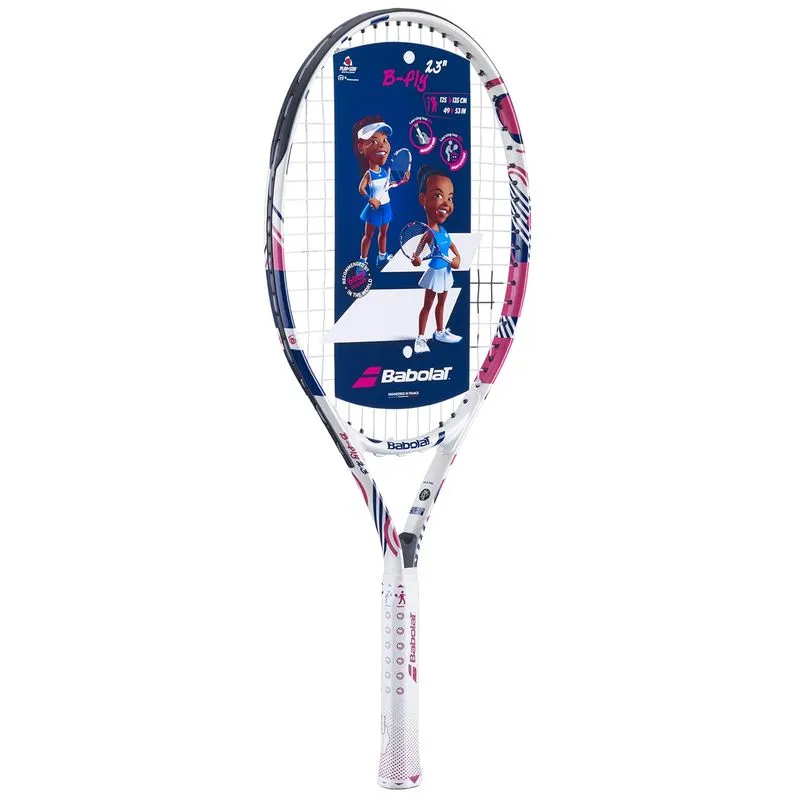
The most significant difference between these two racquets lies in what they are made of. The Babolat B'Fly 23 is constructed from aluminum. In the world of tennis, aluminum is the standard for junior racquets because it is incredibly lightweight and durable. It can survive being dropped on the court or accidentally hitting the net post, which is a common occurrence with younger players. However, aluminum is quite stiff and doesn't offer much in the way of vibration dampening.
The YONEX EZone Ace, on the other hand, is a graphite racquet. Graphite is the gold standard for performance. It is more flexible than aluminum, meaning it can absorb the shock of the ball impact rather than sending that vibration straight into the player's arm. This makes the EZone Ace a much more "arm-friendly" option for players who are starting to hit the ball with more force.
2. Length and Maneuverability
The length of a racquet dictates the "swing weight" and the reach of the player. The Babolat B'Fly is 23 inches long. This is specifically designed for children who are not yet tall enough or strong enough to handle a full-sized 27-inch racquet. A shorter racquet allows a child to swing through the ball with a proper technique rather than "dragging" a heavy frame behind them.
The YONEX EZone Ace is a standard 27-inch racquet. This is the length used by professionals and most adults. Because it is longer, it offers more leverage, which translates to more power on serves and groundstrokes. However, because it is only 9.2 ounces, it remains incredibly maneuverable for a full-length frame.
3. Educational Features vs. Performance Tech
Babolat has done something brilliant with the B'Fly series by including visual aids. The racquet features a "Memo Grip," which provides visual cues to help kids remember where to place their hands for different strokes. These visual guides act like training wheels, allowing the child to self-correct during practice.
The YONEX EZone Ace focuses on performance technology. It features the 8th-generation EZONE technology, most notably the Isometric head shape. Unlike a traditional round or oval head, the Isometric shape squares off the top of the frame, which effectively expands the sweet spot. For a beginner who might struggle with consistent off-center hits, this technology is a lifesaver.
4. Playability and Power Potential
When we talk about playability, we are looking at how easy it is to actually play tennis with the racquet. The Babolat B'Fly is designed for the "Red Ball" or "Orange Ball" stages of junior tennis. The 16x16 string pattern is quite open for a small head, which helps the child generate a bit of spin and height.
The YONEX EZone Ace is built for power. The EZone line is famous for being the "easy power" series in the YONEX catalog. With a 100 square inch head and a graphite frame, it provides a significant amount of pop. If you are a beginner who struggles to get the ball deep into the opponent's court, the EZone Ace will do a lot of the heavy lifting for you.
5. Stringing and Readiness
One practical consideration is that the data indicates the Babolat B'Fly 23 is an unstrung racquet. This is somewhat unusual for a junior aluminum frame, and it means you will need to purchase strings and pay for a stringing service.
The YONEX EZone Ace comes pre-strung. This is a massive advantage for a beginner who doesn't want to deal with the technicalities of string tension and gauges right away. You can take it straight from the box to the court.
Pros and Cons Summary
Babolat B'Fly Junior 23 Inch Tennis Racquet - Pros & Cons
thumb_up Pros
- check_circle Extremely lightweight (7 oz), perfect for small wrists and shoulders.
- check_circle Visual grip guides (Memo Grip) are the best educational tool in the industry.
- check_circle Durable aluminum construction can handle the rough-and-tumble nature of kids.
- check_circle Sized perfectly for the 49-53 inch height range.
thumb_down Cons
- cancel Aluminum frame lacks the shock absorption of graphite.
- cancel Comes unstrung, requiring extra effort and cost before use.
- cancel Very narrow window of use (kids will outgrow it in 1-2 years).
YONEX EZone Ace Tennis Racquet - 4 3/8" Grip - Pros & Cons
thumb_up Pros
- check_circle High-quality graphite construction provides excellent feel and arm protection.
- check_circle Isometric head shape creates a massive, forgiving sweet spot.
- check_circle Pre-strung and ready to play immediately.
- check_circle Lightweight (9.2 oz) for a full-sized racquet, making it very easy to swing.
thumb_down Cons
- cancel Significantly more expensive ($110 vs $49).
- cancel Might be too long and heavy for children under 10.
- cancel Advanced players will find it too light and unstable.
Price & Value Comparison
At $49.00, the Babolat B'Fly 23 is an accessible entry point. Even when you factor in the cost of stringing, you are likely looking at an $80 investment. For a racquet that a child will use for roughly two years of lessons, that is a fair price for a brand-name tool.
The YONEX EZone Ace sits at $110.00. While this is more than double the price of the Babolat, you are paying for the jump from aluminum to graphite. The EZone Ace offers a lot of the same technology found in the professional versions used on the ATP and WTA tours, but in a package that is easier for a novice to handle.
Final Verdict
The choice between these two racquets isn't about which one is "better" in a vacuum, but rather which one fits the player's current physical stage.
Choose the Babolat B'Fly Junior 23 if:
- You are buying for a child between 6 and 9 years old.
- The player is between 49 and 53 inches tall.
- You want a racquet that specifically helps teach proper grip mechanics.
- You are a teenager or adult beginner.
- You want a full-sized 27-inch racquet that you won't outgrow in twelve months.
- You prioritize arm comfort and want the vibration dampening of a graphite frame.
Is a 23-inch racquet too small for a 10-year-old? expand_more
Generally, yes. Most 10-year-olds have moved into 25-inch or even 26-inch racquets. The 23-inch
Why does the frame material matter so much? expand_more
Aluminum is stiff and cheap, transmitting shock to the arm. Graphite is a composite material that can be engineered to flex, absorbing energy and making the racquet more comfortable for your joint health.
Can an adult use the Babolat B'Fly? expand_more
I would strongly advise against it. The grip is only 4 inches, which is much smaller than a standard adult grip. The
Does the YONEX EZone Ace come with a cover? expand_more
While most EZone Ace racquets sold at this price point include a basic head cover or a drawstring bag, it is always worth checking the specific retailer's listing. The most important "extra" is that it comes pre-strung.